How to legalise animals on a property: a basic guide
The legalisation of animals on a property can be a complex process that requires compliance with certain legal and administrative requirements. If you are considering undertaking this type of procedure, it is important to bear in mind some general steps to ensure everything is carried out correctly. Below we offer a general guide to help you navigate this process. For more detailed and personalised advice, we invite you to get in touch with us.
1. Prior Authorisation for the Property
Before introducing animals onto a property, it is essential that it meets the necessary legal requirements. In Galicia, for example, livestock holdings must have a REGA code (Registro de Explotaciones Agrarias — Agricultural Holdings Register). To obtain it, an application must be submitted to the relevant authorities, which can be managed directly or through an authorised representative. This code is essential to ensure that the property is officially enabled to house animals.
2. Inspection of the Facilities
The authorities will inspect the property to verify that it meets the minimum requirements. Some general conditions that are typically required include:
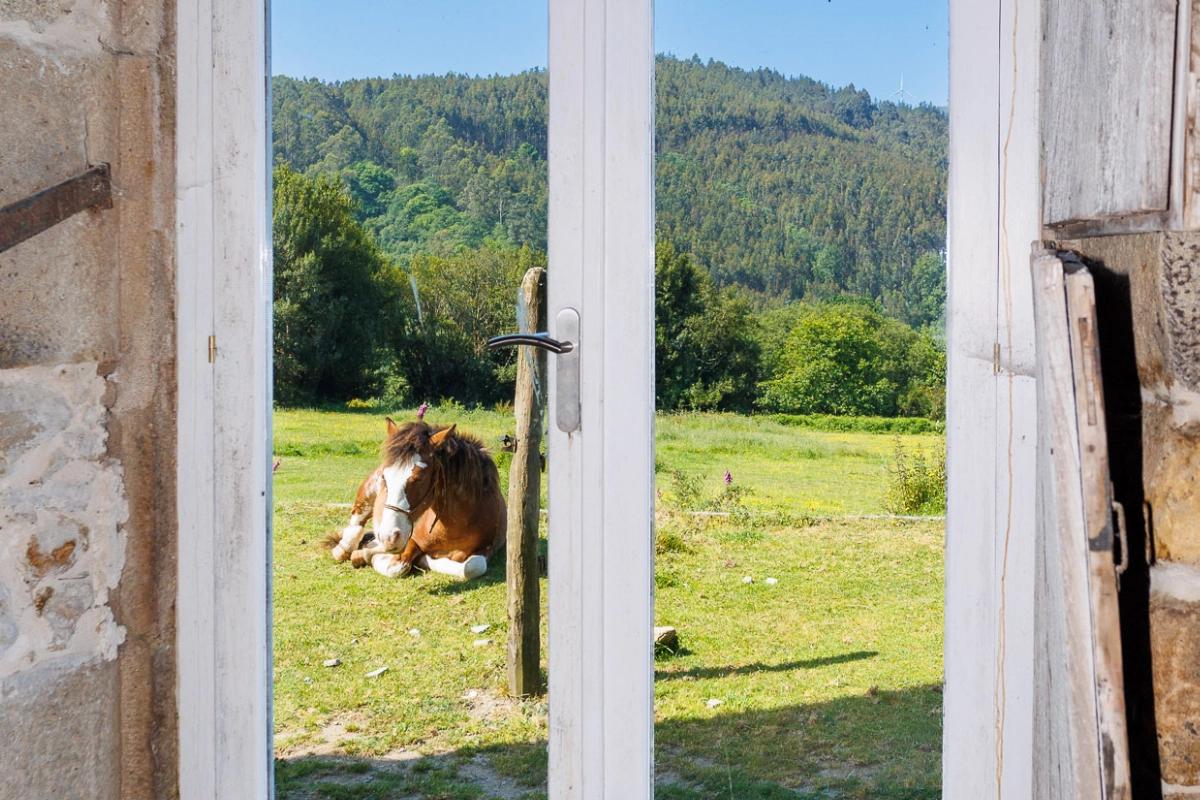
- Adequate shelter for the animals (such as a stable).
- Devices for supplying water and food.
- Fencing or structures to ensure the safety of the animals.
- Safe materials suitable for disinfection in the facilities.
- Adequate systems to protect the animals from adverse weather conditions and potential predators.
It is important that the facilities are kept in good condition to avoid any issues during the inspection.
3. Required Documentation
Specific documentation relating to the animals will likely need to be submitted, such as valid European passports and microchip identification. This type of identification is essential for health monitoring and animal traceability.
In addition, you may need additional permits for transporting animals from other countries, such as a transport authorisation (TRACES) if the animals come from within or outside the European Union.
4. Registration of the Animals
Once the animals arrive at the property, you will need to complete the registration process in the corresponding official records. This step ensures that the holding is in compliance with local regulations and that the animals are officially registered in the relevant database. Proper registration is not only a legal requirement, but also guarantees the protection of the animals and their correct health monitoring.
5. Additional Considerations
The process may vary depending on the type of animal, the location of the property and specific local regulations. It is essential to be well informed about the particular requirements of your region and to plan ahead to avoid unnecessary delays or problems.
6. Why Contact Us?
At Grupo Country Homes, a family business with more than 25 years of experience, we specialise in the sale of properties in Galicia, as well as parts of Asturias, León and northern Portugal. We have in-depth knowledge of the property market and of the procedures required to adapt properties for different uses, including the legalisation of animals.
From adapting facilities to handling legal formalities, we are here to make every step easier for you. We can also help you connect with the right professionals, such as official veterinarians and legal representatives. Do not hesitate to consult us for a service tailored to your needs.
If you need further assistance or have specific questions about your situation, we are available to help. Our team is committed to providing practical and effective solutions so that you can legalise animals on your property without complications.