New builds in rural Galicia: a practical guide to buying off-plan
Buying a home that exists only on paper is, above all, an act of trust: in a project, a set of plans, a developer and an agreement that is sealed even before the first stone is laid. In return, it offers something the second-hand market cannot: the certainty of knowing every detail, the confidence of having consciously chosen each space, and a home that will begin its story with you.
In this article we explain the main advantages and risks of this type of purchase, which questions you should put to the developer before signing, and the particularities of rural new builds in Galicia.
Why buy off-plan? The main advantages
Customisation of finishes
A home at the project stage is, in part, a made-to-measure home. Within the margins set by the developer, the future owner can take part in the decisions that will define how every corner looks and feels: materials, finishes, appliances…
A build with no secrets
Those who buy off-plan have the chance to get to know their home in detail: where the pipes run, how the electrical system has been designed, how the foundations have been solved… That knowledge translates into confidence in every space and total control when, years down the line, the time comes to undertake a renovation or fix a fault.
The satisfaction of being the first to live in every space
A new home carries none of the wear and tear or the decisions of previous owners. The installations, finishes and systems of the house are in their optimal condition from day one, and the buyer knows in advance what they will receive. There are no hidden surprises, inherited damp or pending renovations.
Price before appreciation
The price of an off-plan property reflects the value of the home at the moment of signing, not the value it will have once completed. In markets with sustained demand, a newly built home tends to appreciate during the time the construction takes.
Tips for buying a new build safely
Setting deadlines and anticipating possible delays
One of the main concerns when buying off-plan is that delivery may be delayed. Construction timelines can be affected by supply problems, changes to the project or administrative difficulties. To minimise this risk, it is essential that the contract clearly states the delivery date and the penalties in case of non-compliance.
Understanding the architectural project
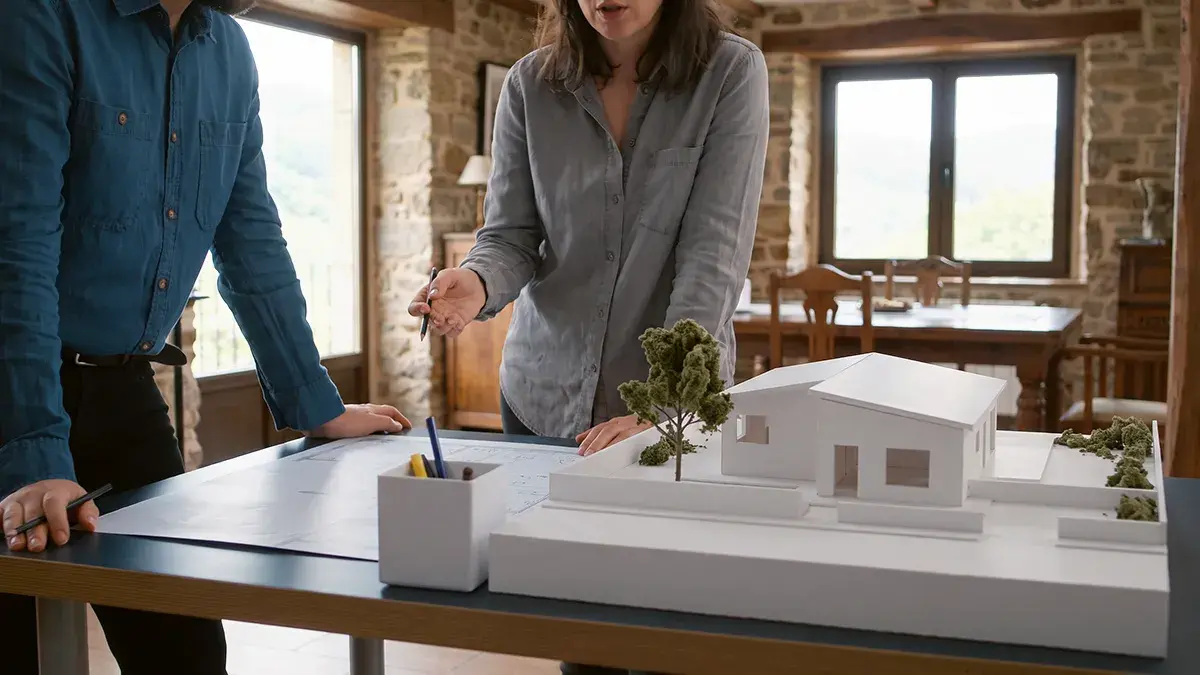
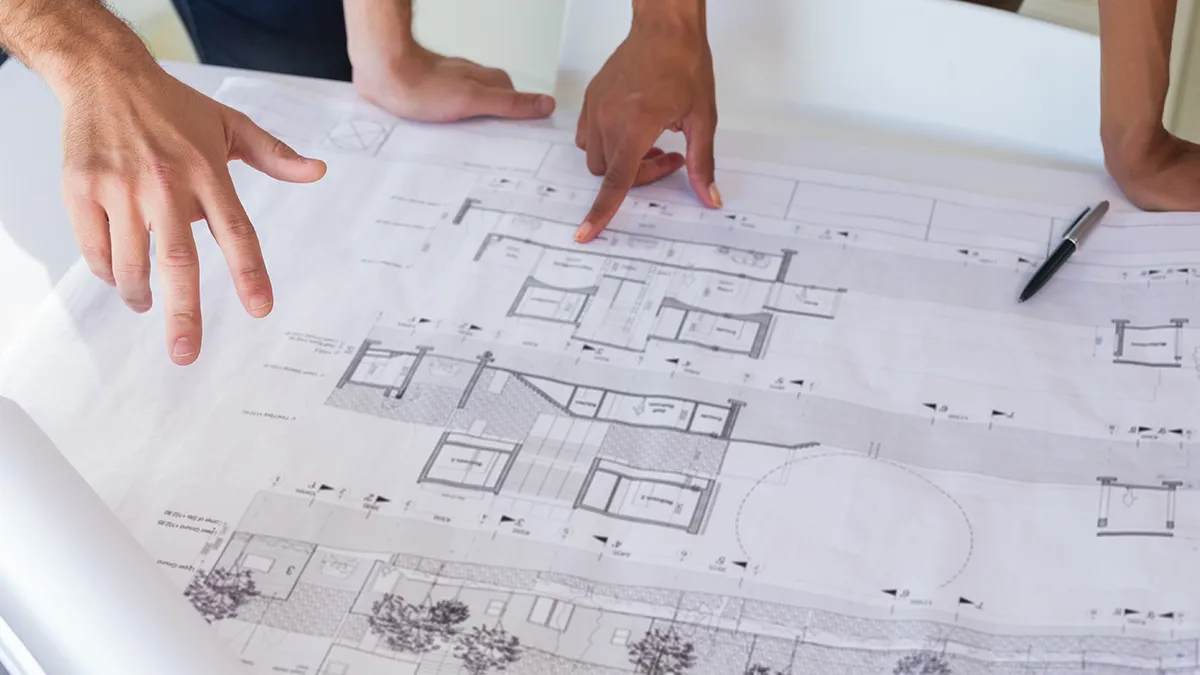
Before signing, you should review the project and check that what is described in the plans and the specification of materials corresponds exactly to what will be built. Details of materials, usable floor areas, ceiling heights and finishes must be specified precisely. It is reasonable to turn to a trusted professional —an independent architect or quantity surveyor— who can verify the feasibility of the project.
Asking the developer before signing
If you are thinking of buying a new-build property, these are the questions that should not be missing before you sign any contract:
- Has the project been endorsed by the official architects' association (colegio de arquitectos)? The endorsement certifies that the project complies with technical and planning regulations.
- Has the building licence for the plot been granted, or is it still being processed? A licence that is still pending can lead to unexpected delays.
- Has the ten-year structural insurance (seguro decenal) been taken out? It is mandatory and must be documented.
- What is the delivery date, and what penalties apply if it is not met? It must be stated in the contract with clear dates and conditions.
- What happens to the amounts paid in advance if the construction is not completed? By law, they must be deposited in a special account or guaranteed by a financial institution.
- To what extent can the finishes be customised, and until when? The margin for customisation varies greatly from one developer to another; it is worth clarifying before signing.
- What is the expected energy rating of the building? Current regulations require minimum efficiency standards in new builds.
- Which construction company will carry out the work? Knowing the contractor's track record and financial solvency reduces uncertainty about the quality of the work.
The legal guarantees that protect the buyer
Spanish legislation protects buyers of new builds robustly. The Building Regulation Act (Ley de Ordenación de la Edificación, LOE) establishes three mandatory levels of guarantee:
- 1 year for finishing and snagging defects: paintwork, carpentry, minor flaws.
- 3 years for defects affecting habitability: damp, installations, insulation.
- 10 years (seguro decenal) for structural defects that compromise the strength of the building.
The ten-year insurance is mandatory in every development and must be taken out before work begins. When signing, the buyer should insist that it is stated in the contract.
Building a new home in Galicia: the importance of land and surroundings
Anyone dreaming of building their home in rural Galicia must understand that not just any plot will do. Planning regulations establish different categories of land that determine what can be built, when and under what conditions. Understanding these categories is important for any buyer of a new build, because it explains why certain locations are more in demand and scarcer.
On consolidated urban land —built-up areas with services and infrastructure already in place— new construction is possible provided the project complies with the current municipal plan: maximum height, buildable area, setbacks and permitted uses. This is the type of land where most new residential development is concentrated.
On developable land —areas earmarked for growth but not yet developed— construction depends on the corresponding planning instruments being approved and implemented, which means longer timelines and additional uncertainty.
On rural land, Galician regulations are more permissive than in other autonomous communities: Law 2/2016 on land in Galicia (Ley 2/2016 del suelo de Galicia) allows, under certain conditions, the construction of a new detached single-family home. Among the requirements are a minimum plot size of 2,000 m², a maximum occupation of 20% of the plot, minimum setbacks of 5 metres from boundaries and a maximum height of two floors and 7 metres. Even so, this is a conditional use subject to specific approval, which in practice is not always feasible, especially in the categories of specially protected rural land, where restrictions are considerably greater.

Building on the Galician coast, an increasingly scarce privilege
Galicia has more than 1,700 kilometres of coastline, but building by the sea is, in practice, extraordinarily difficult. On top of the general planning restrictions comes an additional layer of protection specific to the coast.
The Coastal Law (Ley de Costas) establishes a protection easement of 100 metres from the inner boundary of the shore, within which new residential buildings are prohibited. In certain consolidated urban stretches predating 1988, that strip may be reduced to 20 metres, but these are very specific situations and increasingly uncommon.
On top of this comes Galician regional legislation, which designates as specially protected coastal rural land the land located outside rural settlements and urban land less than 200 metres from the sea, and considers the planning of any strip of up to 500 metres from the shore to be of regional interest.
A design chalet ready to be built in Canide, Oleiros
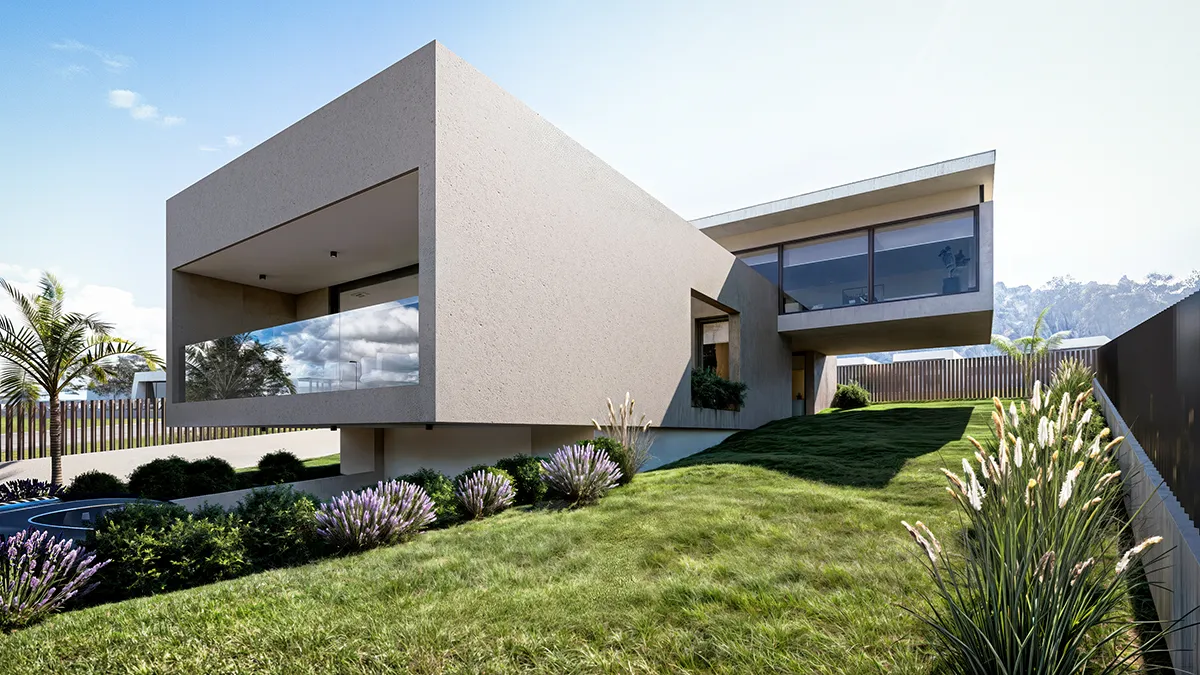
Despite the restrictions limiting construction by the sea in Galicia, it is still possible to find new-build projects just a few metres from the beach. This is the case of this chalet at the project stage located on the coast of A Coruña.
1.490.000 | View full listing
This new-build development is located in Canide, Oleiros, one of the most exclusive residential areas of the province of A Coruña. The 545 m² plot is less than 200 metres from the sea and only 230 metres from Canide beach, in a residential area within the Mariñas Coruñesas e Terras do Mandeo Biosphere Reserve.
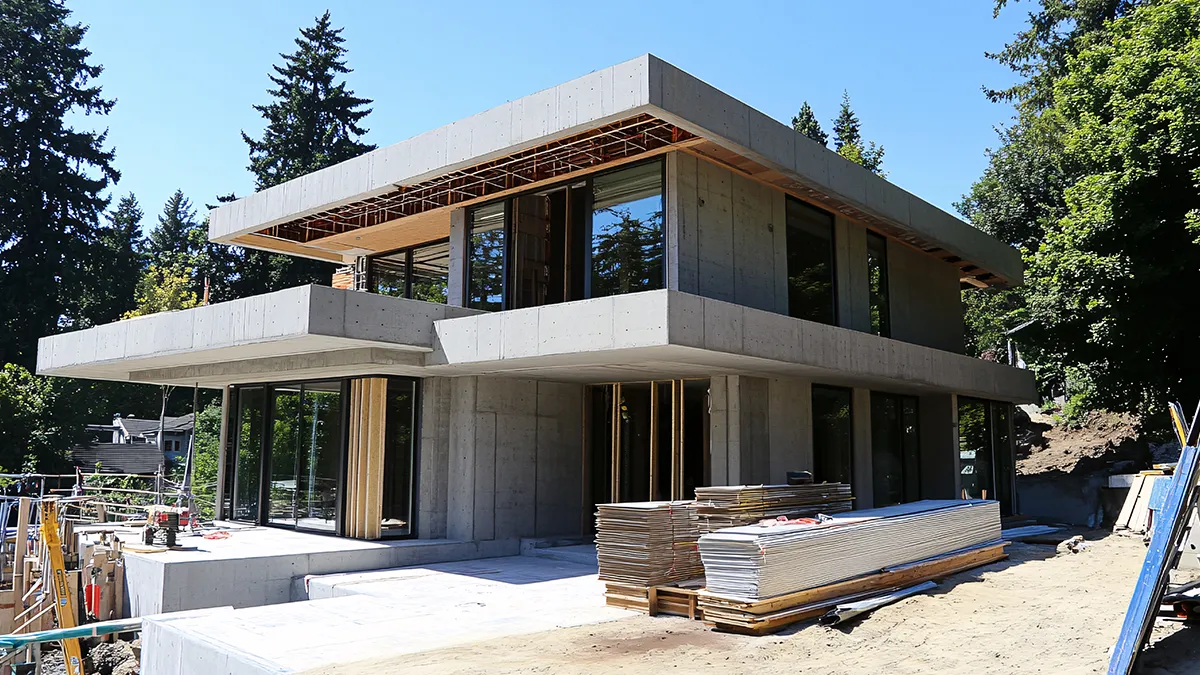
The project envisages an avant-garde design chalet with 412 m² of built area, spread over two floors plus a semi-basement, with minimalist lines, large floor-to-ceiling windows and a rooftop terrace swimming pool with sea views. The garage for two vehicles has a lift directly to the house, and the planned finishes include hardwood flooring, large-format porcelain tiles and underfloor heating on both floors.
From plans to keys with Grupo Country Homes
Buying a home off-plan is no riskier than buying a second-hand one, although it demands a different kind of diligence. Knowing the project, reviewing the documentation, asking the right questions and having the right advice are the tools that turn an operation with uncertainty into a sound decision.
At Grupo Country Homes we accompany buyers in all kinds of property transactions in rural areas, including new builds. If you are interested in the Canide chalet or wish to explore other options available in our catalogue, contact us with no obligation and we will help you find the property that best suits what you are looking for.