This property in Padrón sits right on the Camino Portugués, a short distance from Santiago. It operates as a pilgrim hostel, with a stone courtyard presided over by an old wine press, a bar with a traditional hearth and oven, and an extensive plot with a pool and hórreo. 2027 will also be a Holy Xacobeo Year, which is expected to bring more pilgrims along this stretch of the Camino.




This property sits in a rural hamlet in the Sar valley, within the municipality of Padrón, in the province of A Coruña. Its location is unusual: the Camino Portugués itself passes right in front of its entrance, on one of its final stretches before Santiago de Compostela, a city just over 22 km away.
The area offers a good balance between rural life and connectivity: the N-550 road is close by, there is a nearby railway line, and the immediate surroundings also include some industrial use typical of this kind of peri-urban setting.
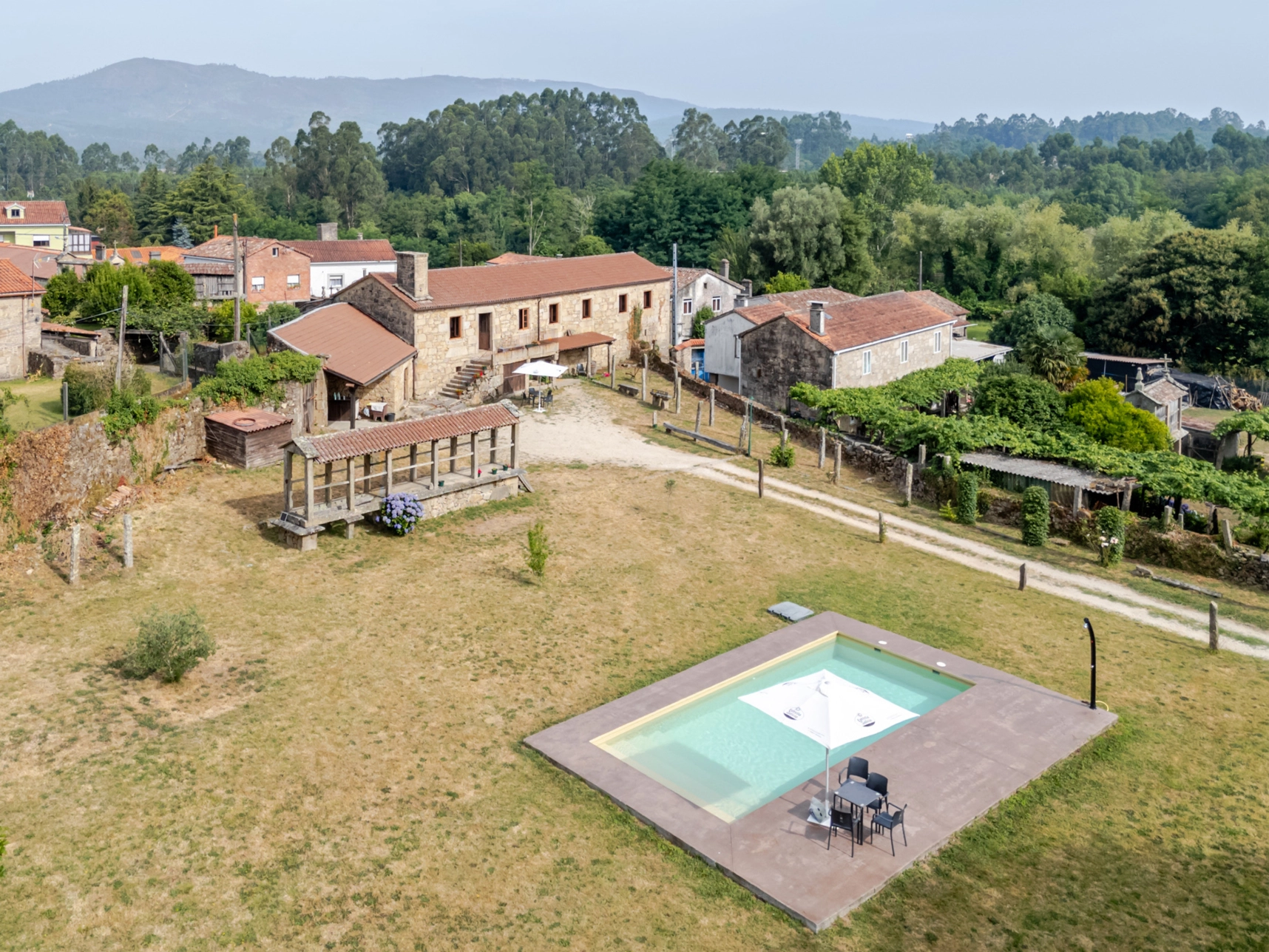
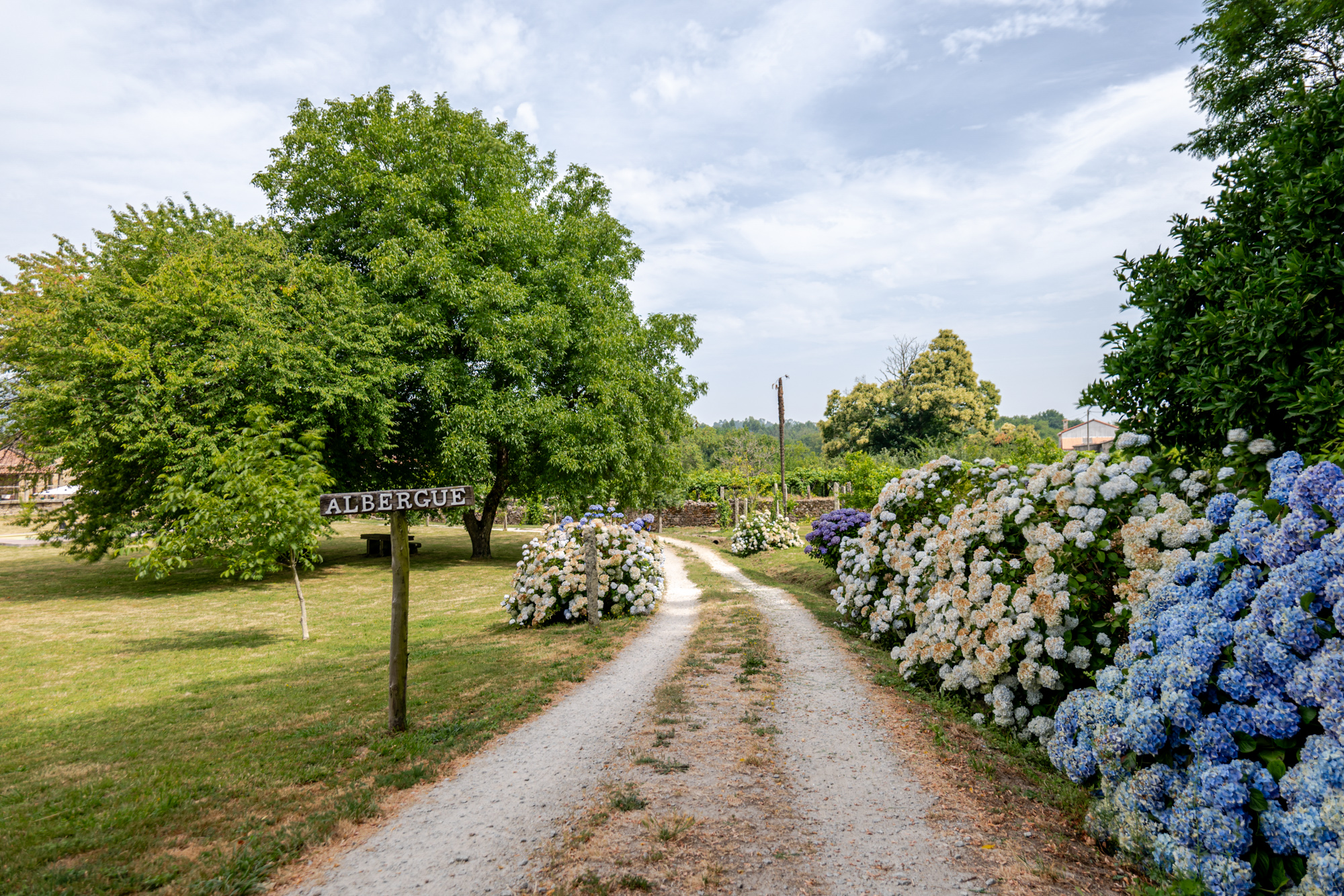
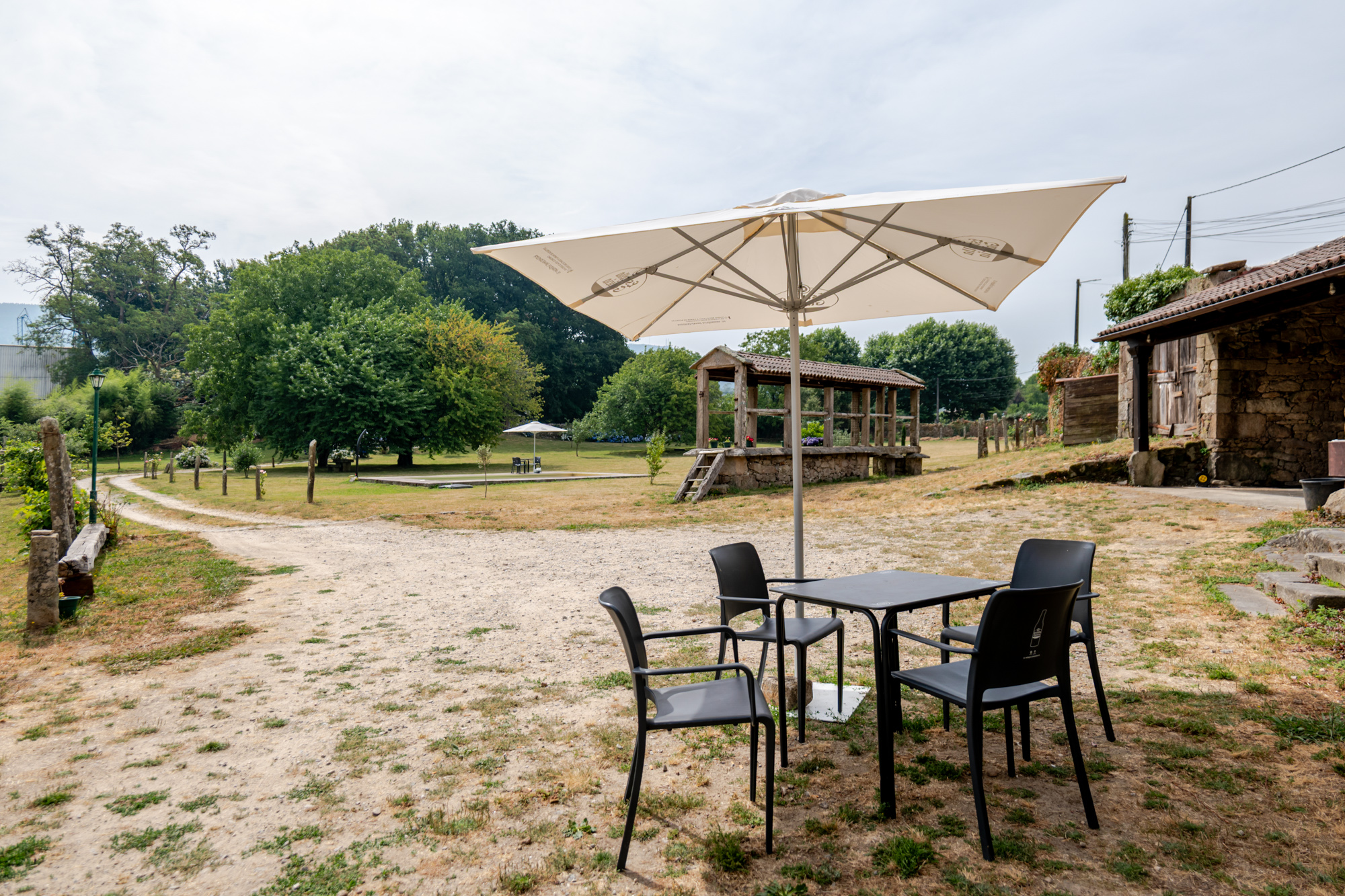
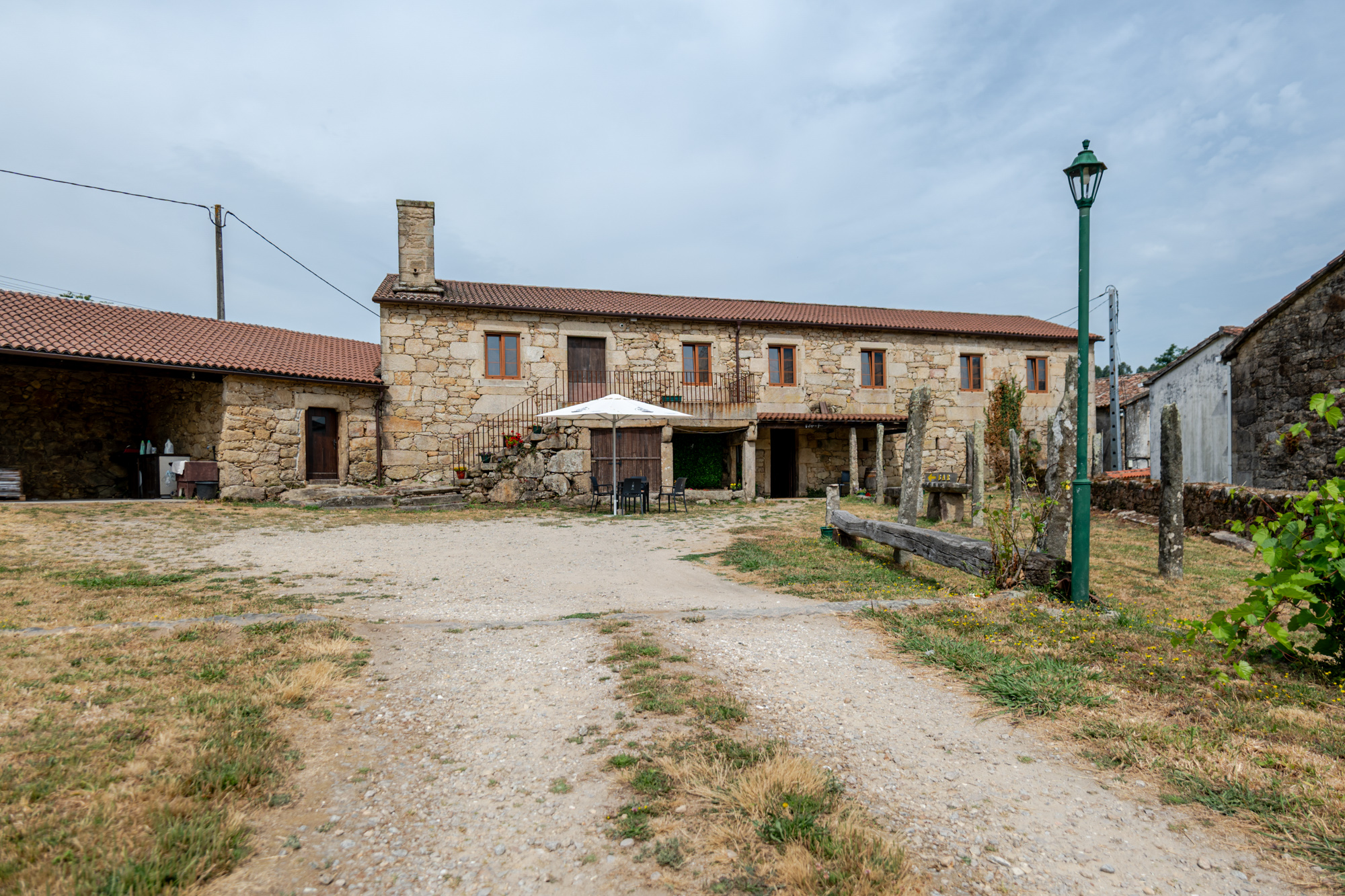
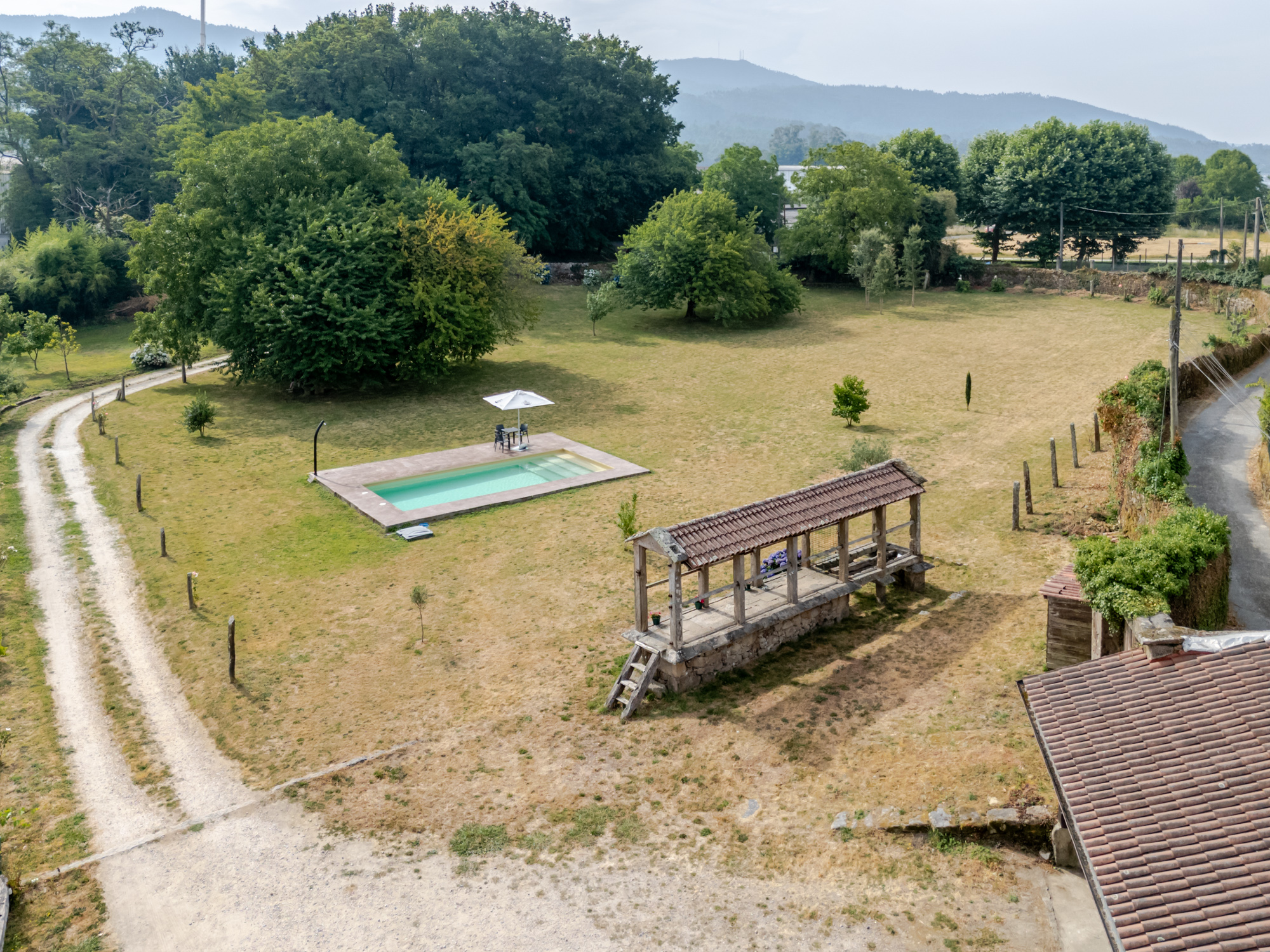
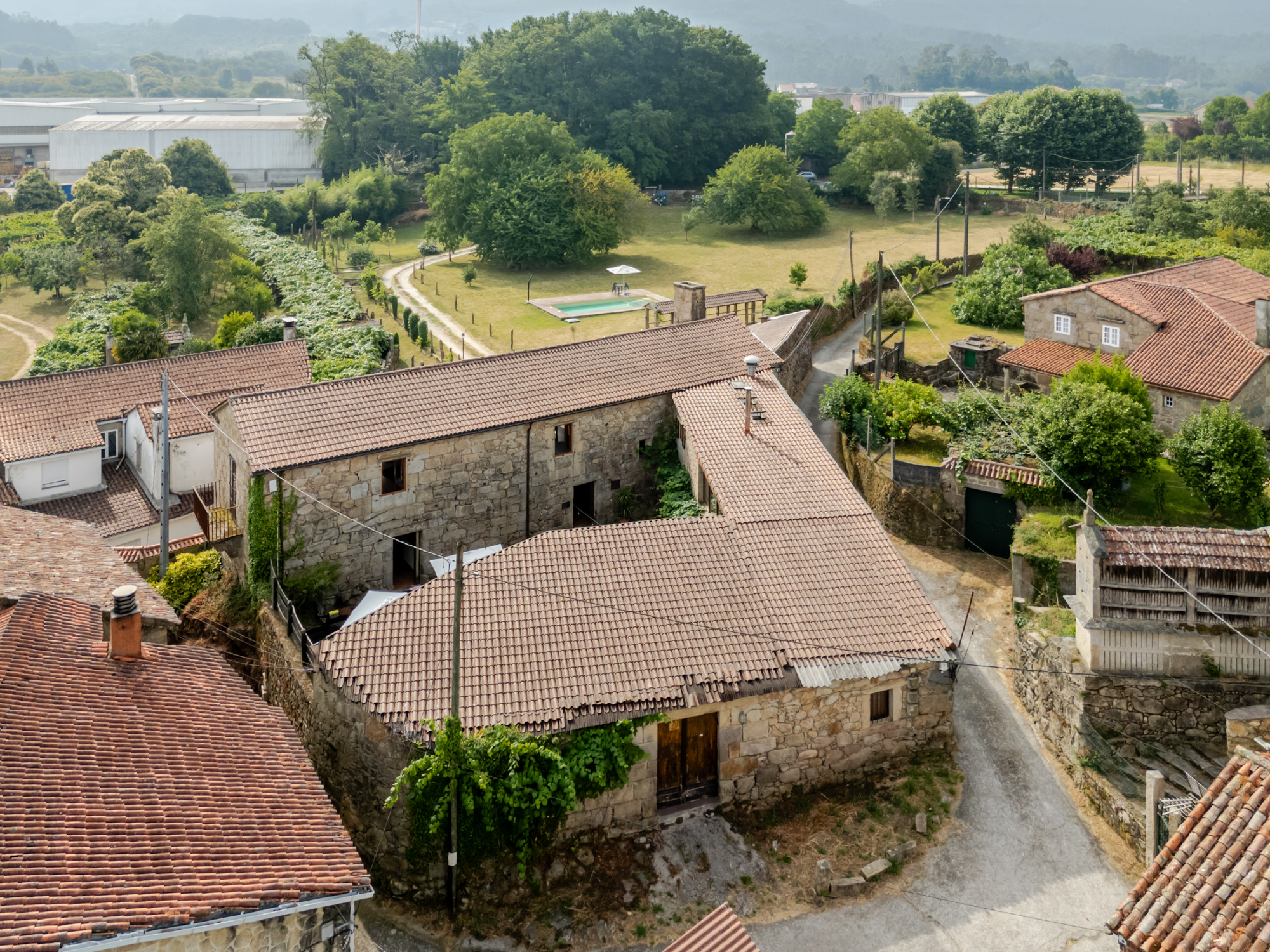
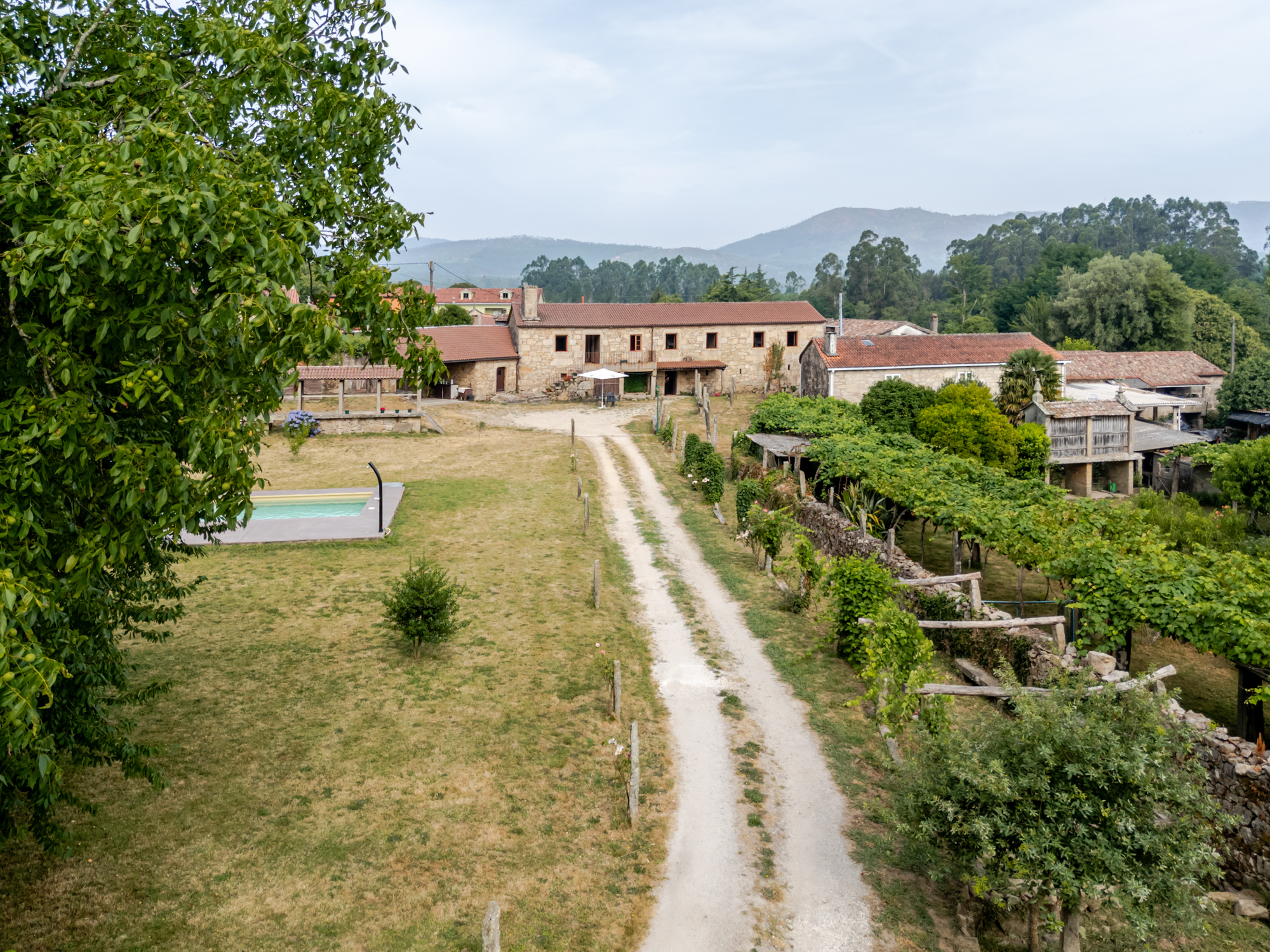
The building is a large traditional stone construction, currently in full use as a pilgrim hostel. It has capacity for 20 beds in bunk rooms, plus a separate single room designed for 2 to 4 guests. The property has two entrances, and the main one leads along a flat track that runs past the pool and the decorative hórreo on the way to the reception area.
On the ground floor is the reception area, with a wooden counter and exposed stone walls, in a setting of distinctly rustic character. A door connects this space with the central courtyard, while an interior staircase leads directly up to the first floor.
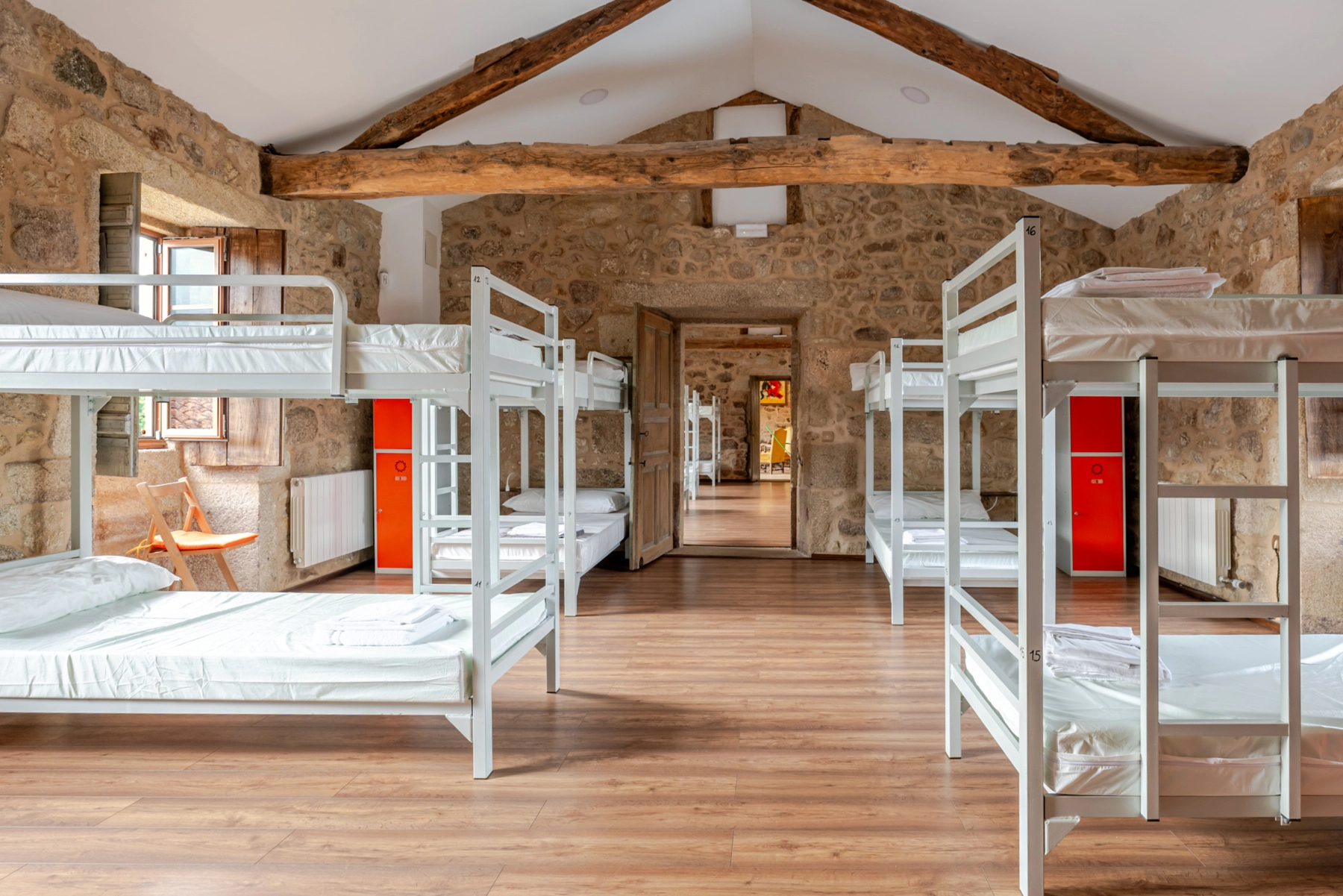
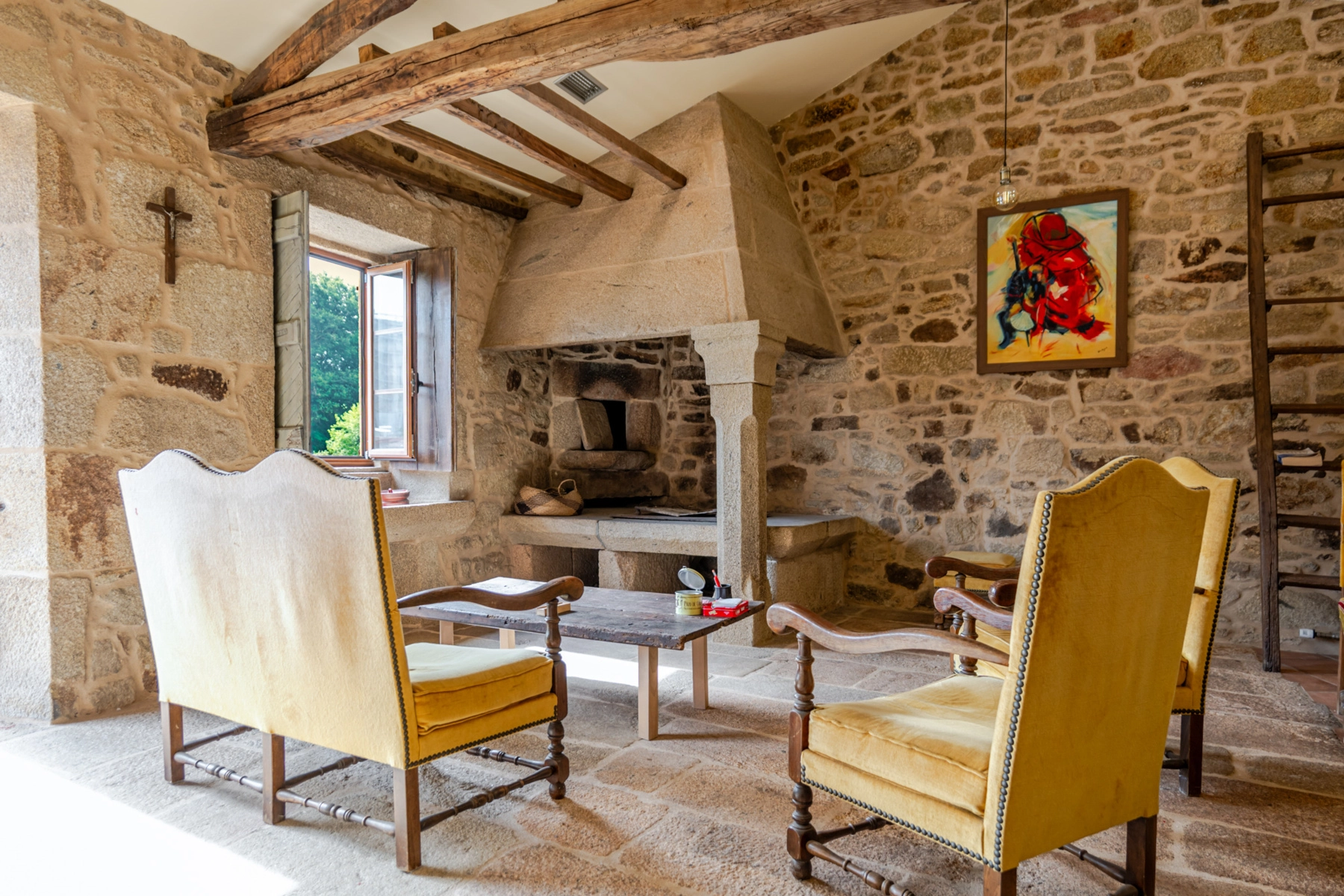
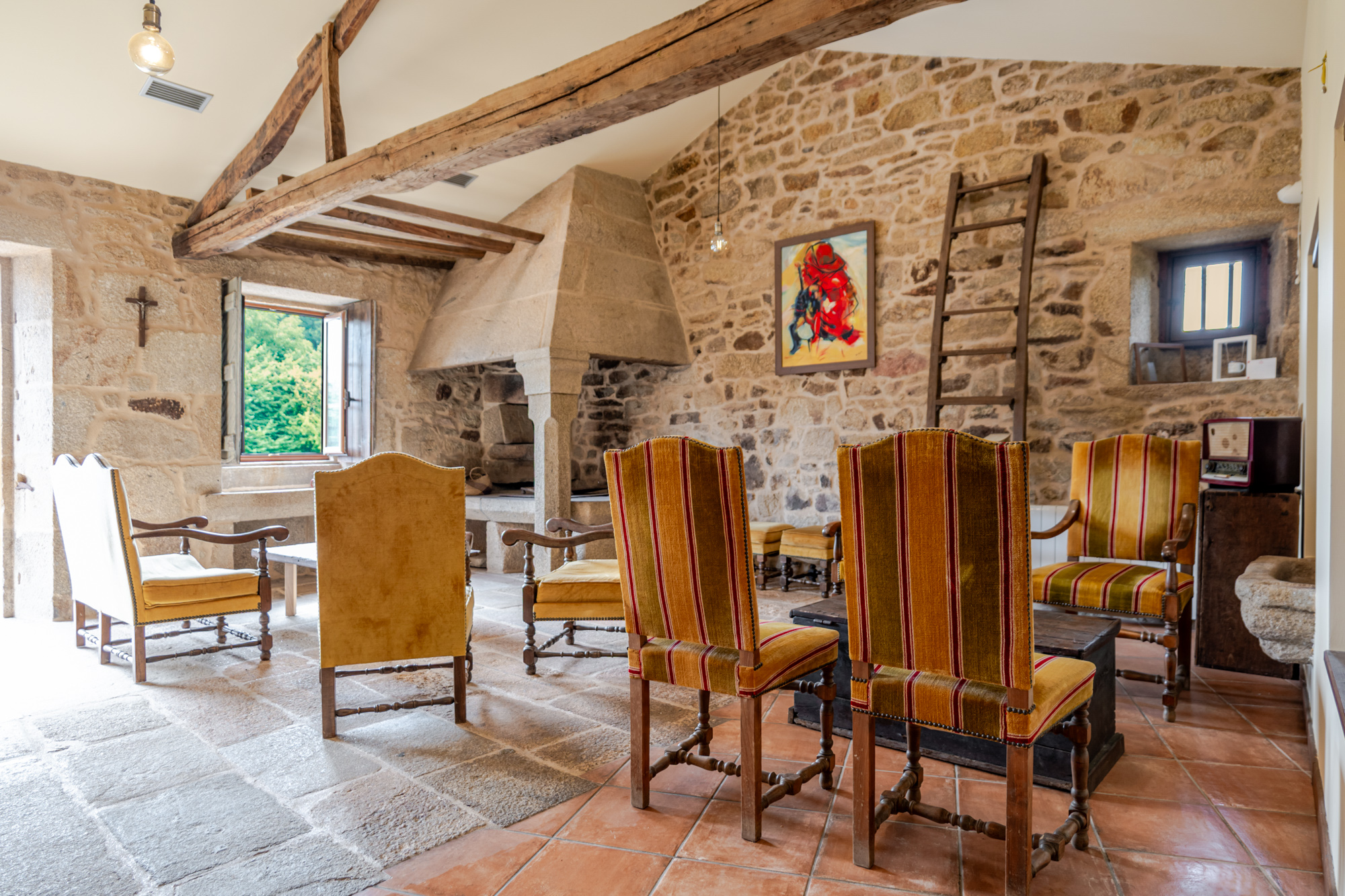
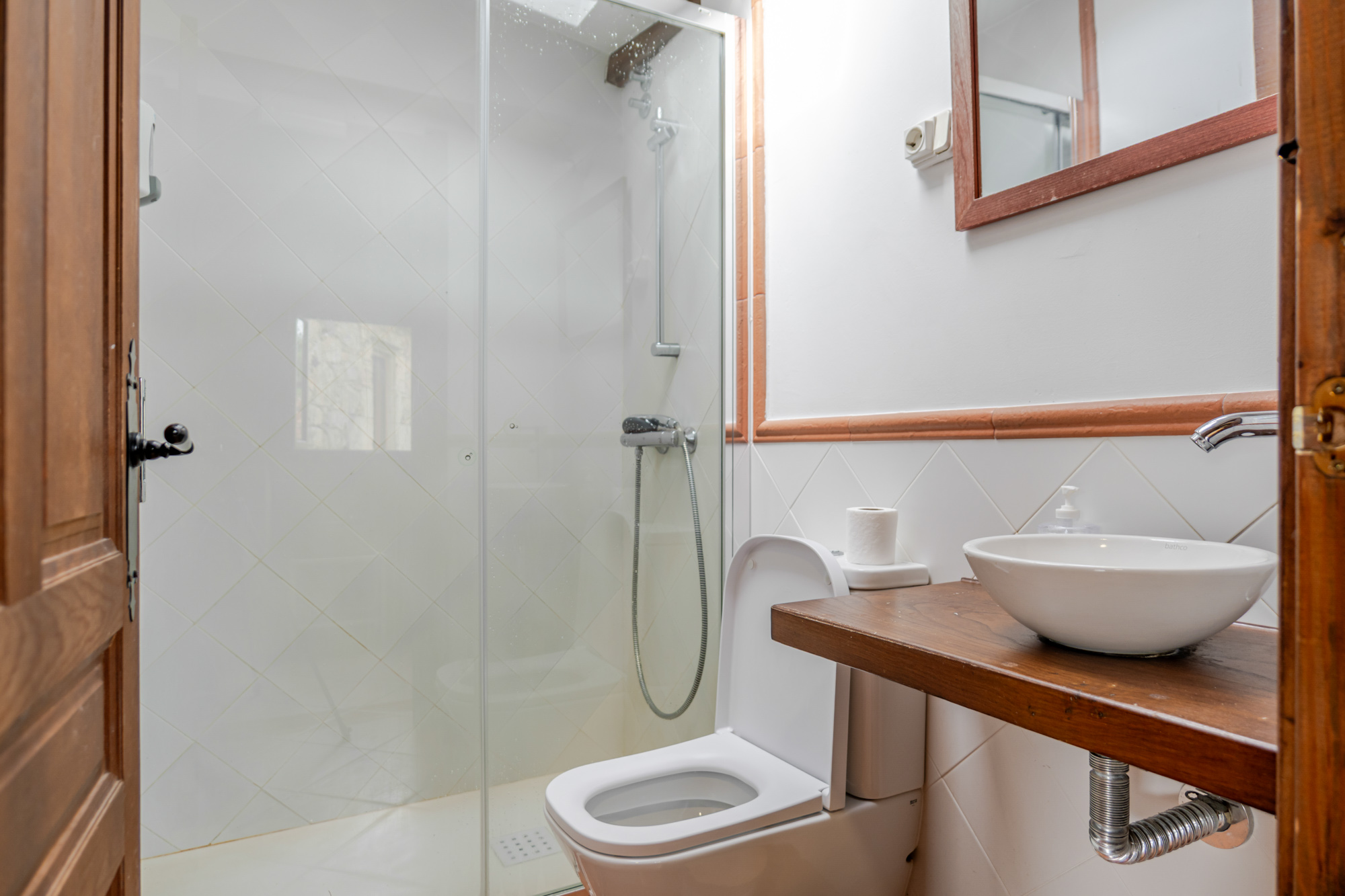
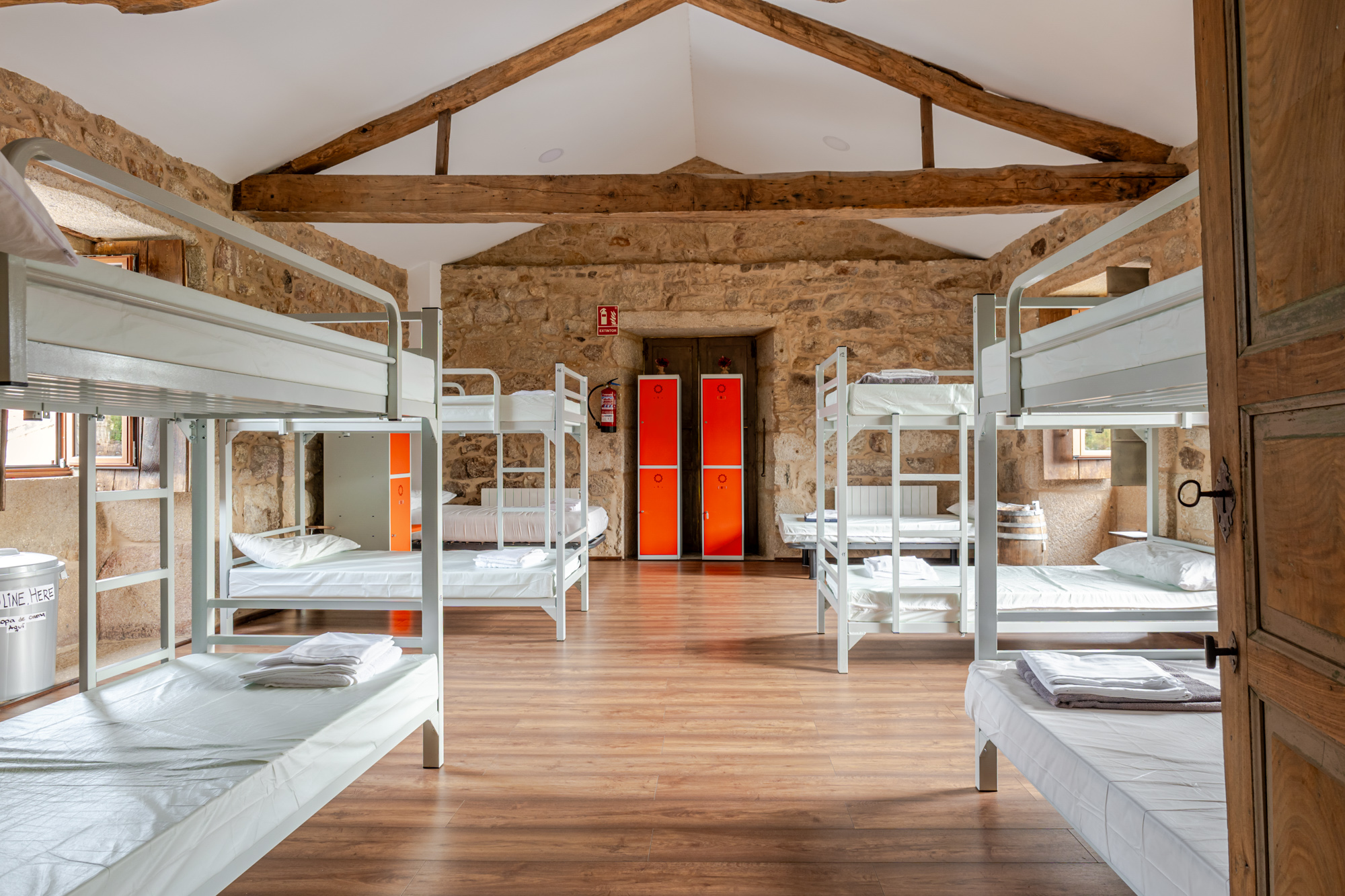
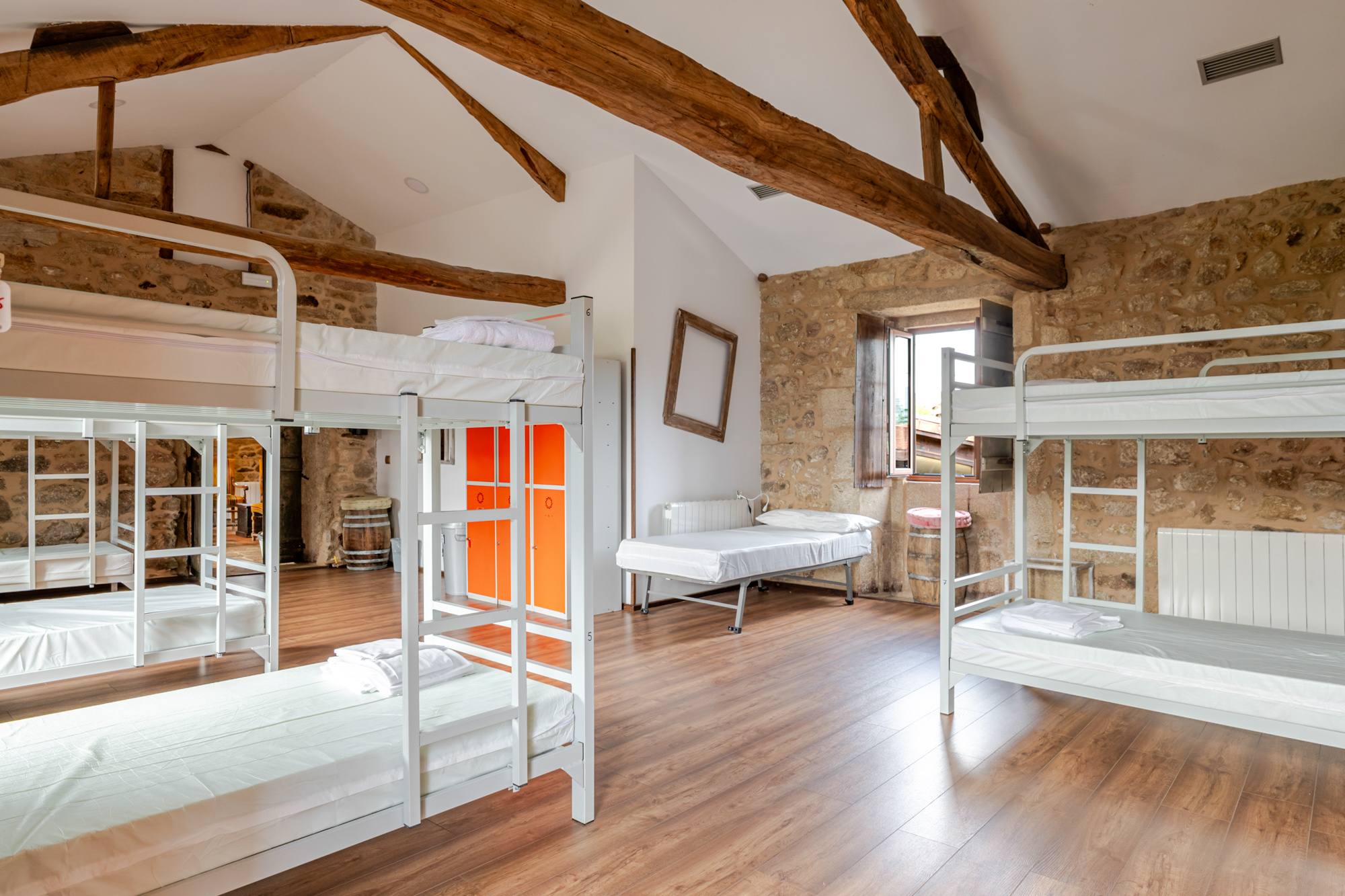
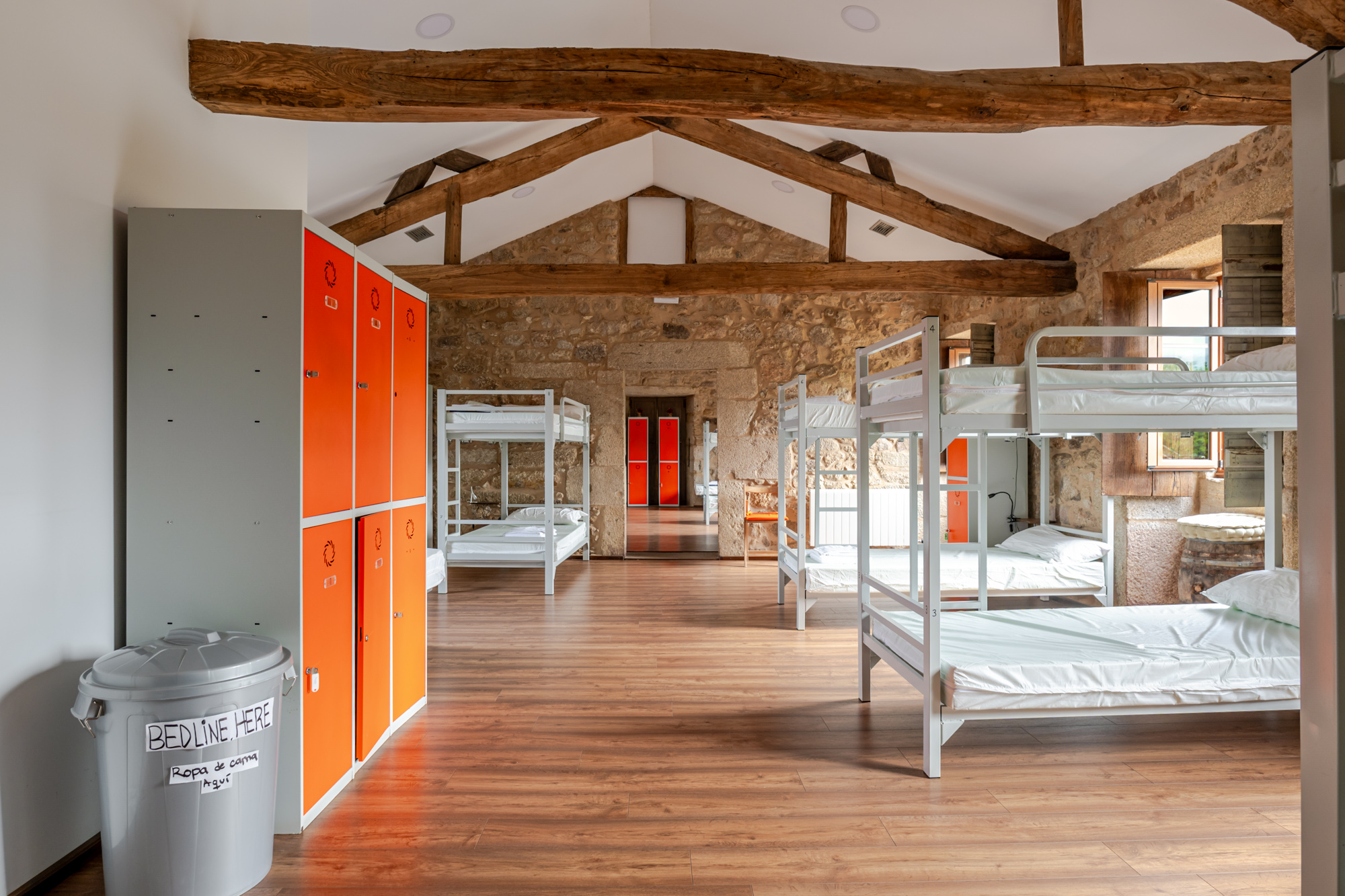
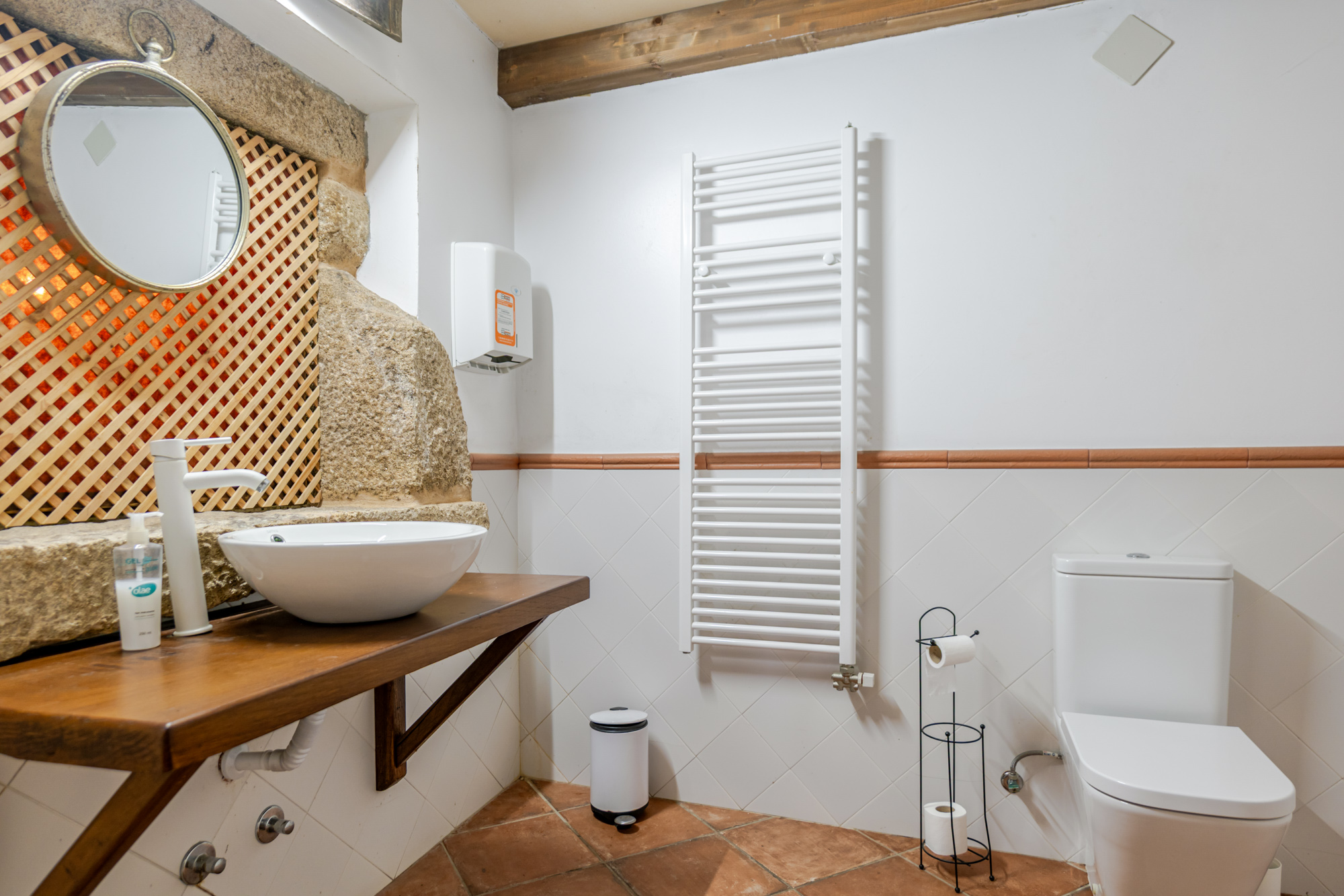
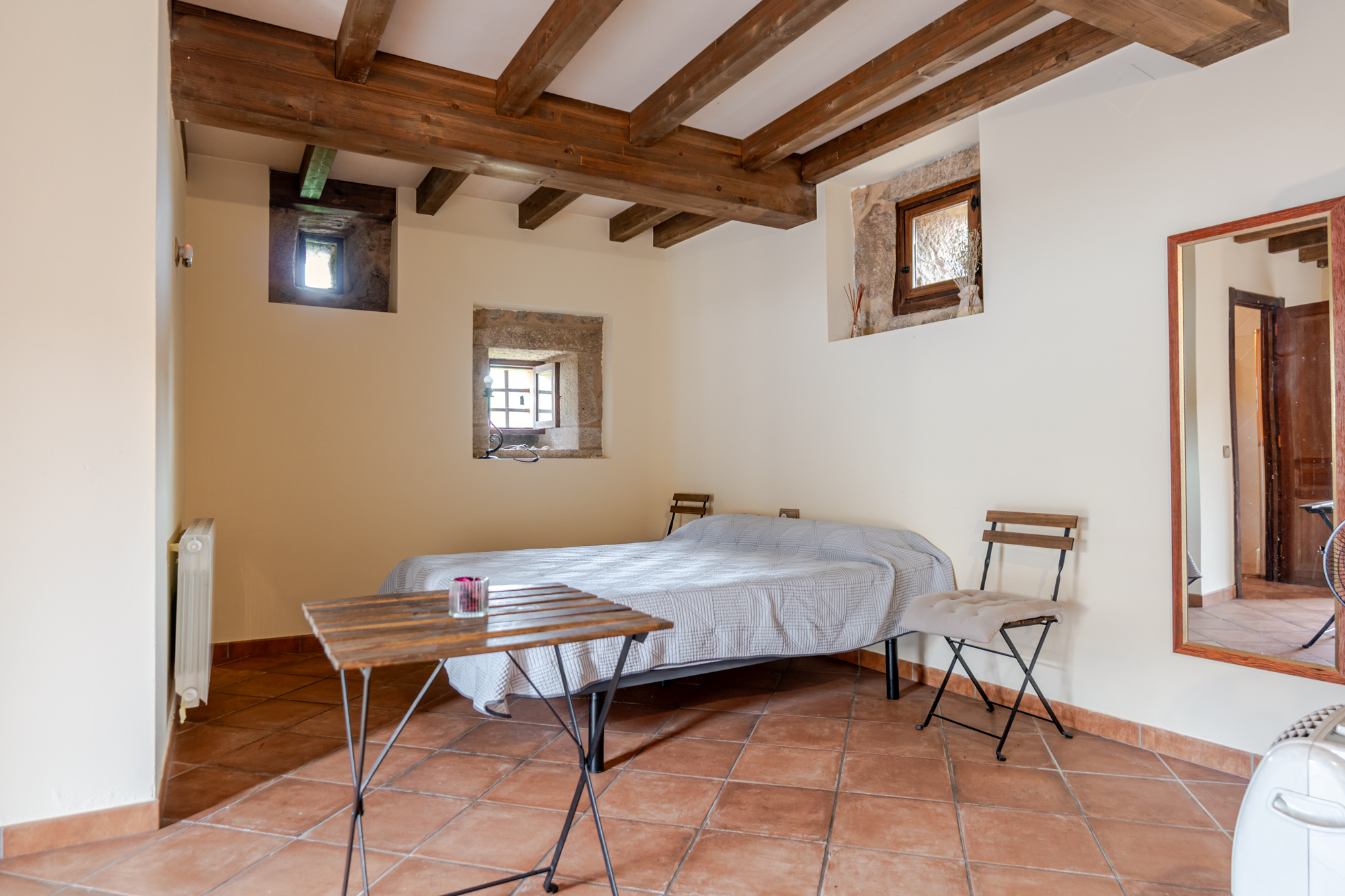
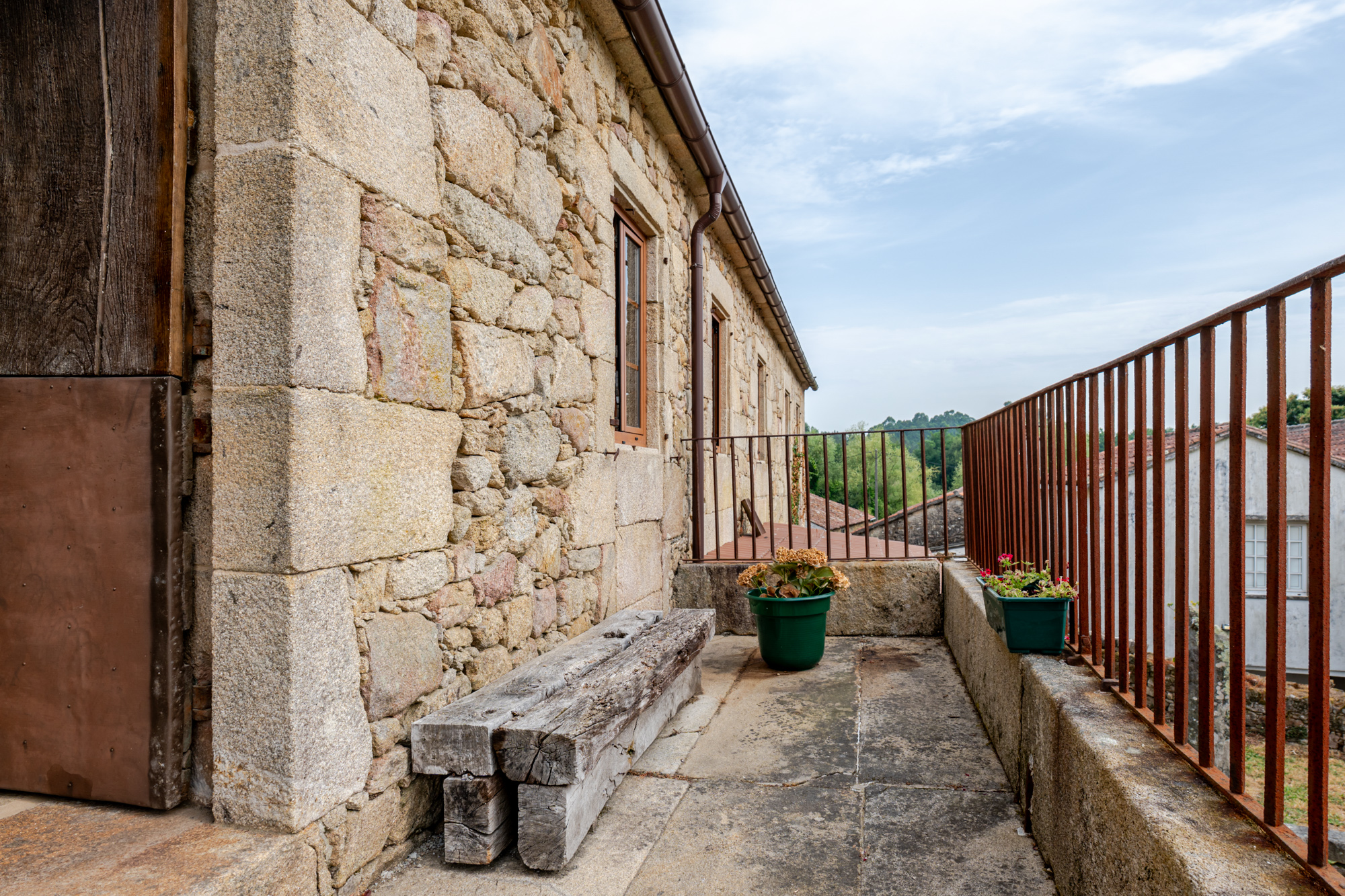
On one side of the courtyard is a single room with its own bathroom, independent from the rest of the accommodation. The first floor is also reached via an exterior stone staircase on the main façade, which leads onto a balcony overlooking the surrounding countryside. This same balcony serves as the entrance to the communal lounge with a well-preserved hearth, which acts as the floor's shared living area. It also gives onto the two shared dormitories, with bunk beds, exposed wooden beams and laminate flooring, each with capacity for 10 people. Three bathrooms and the boiler room complete this floor.
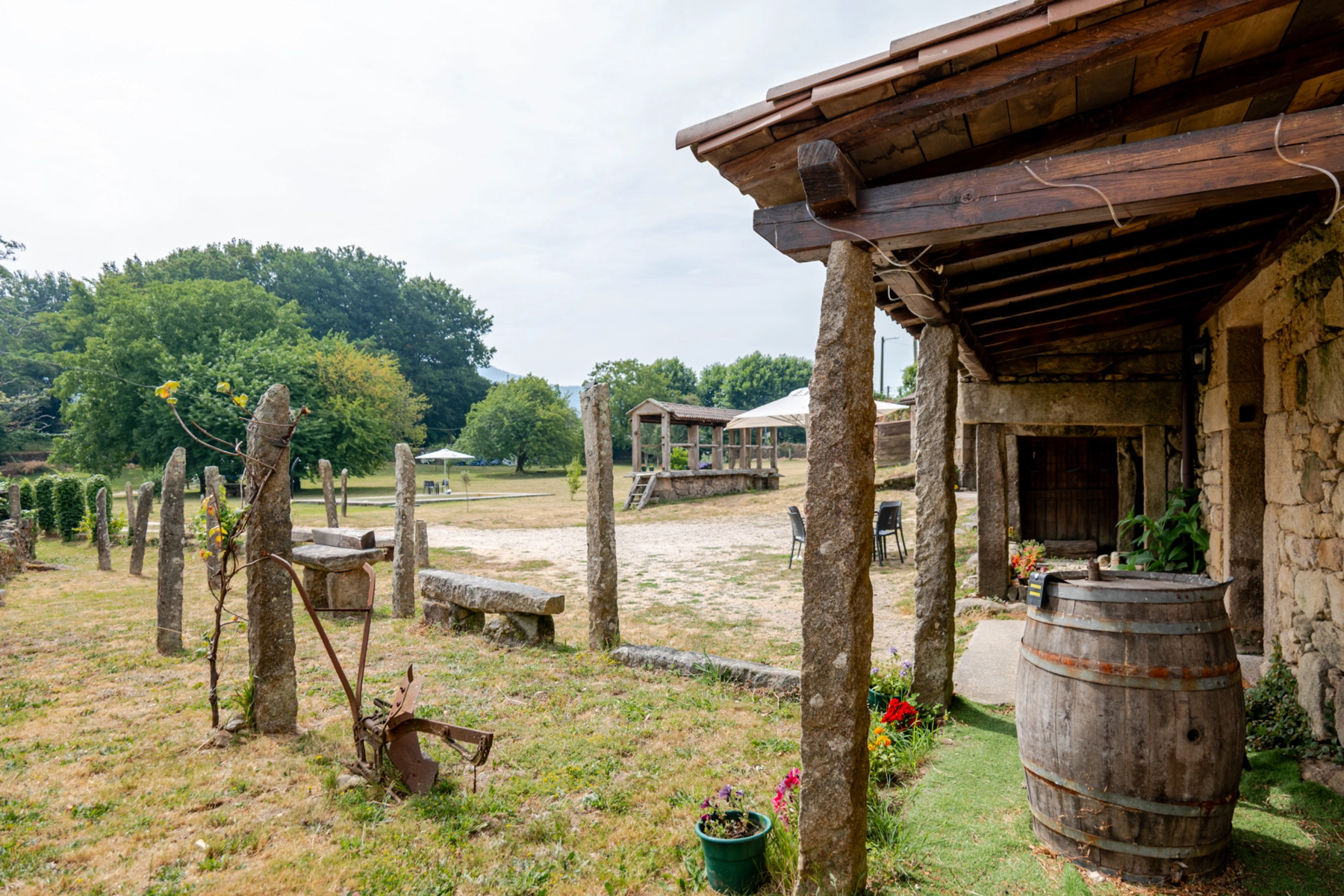
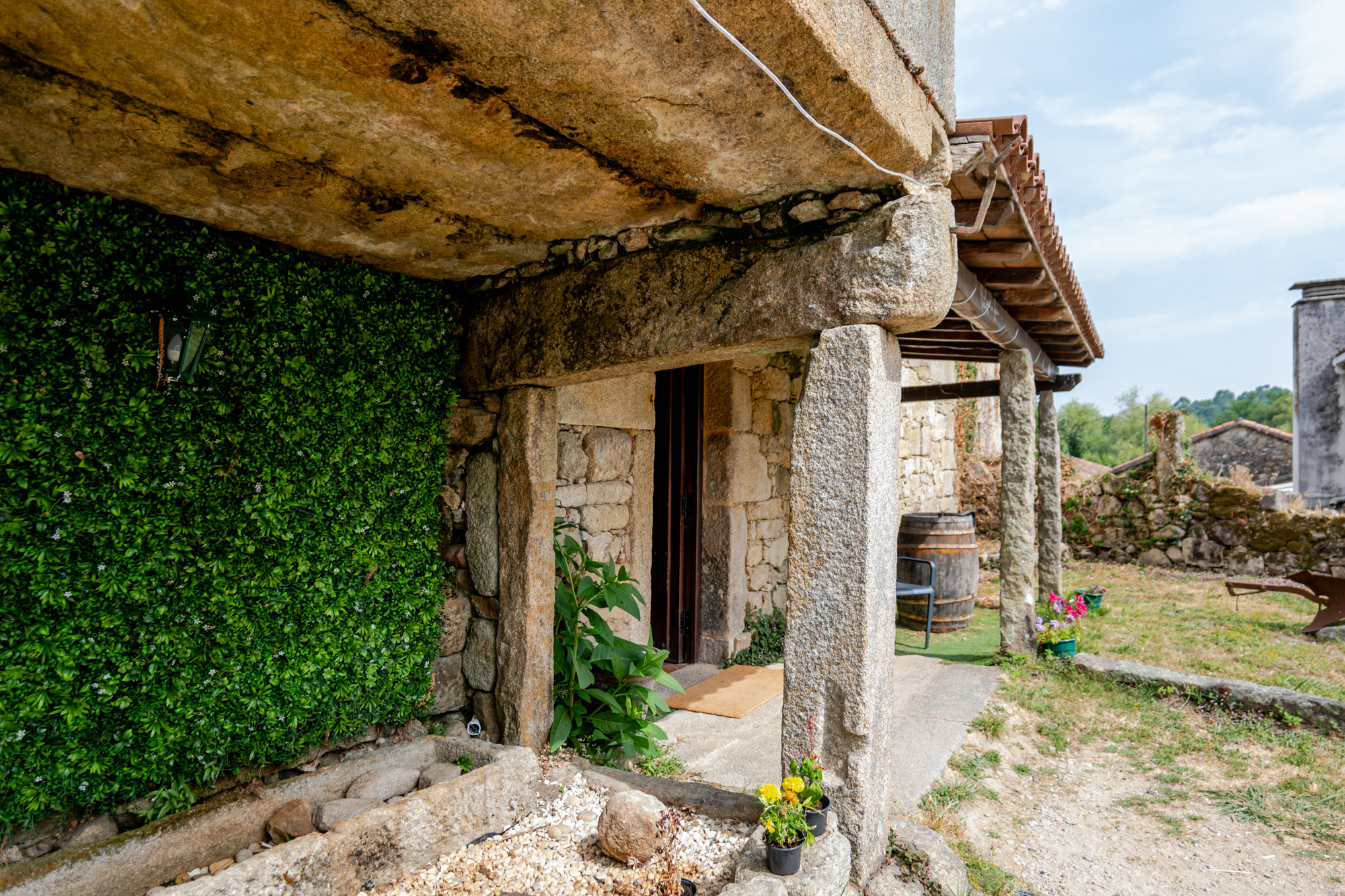
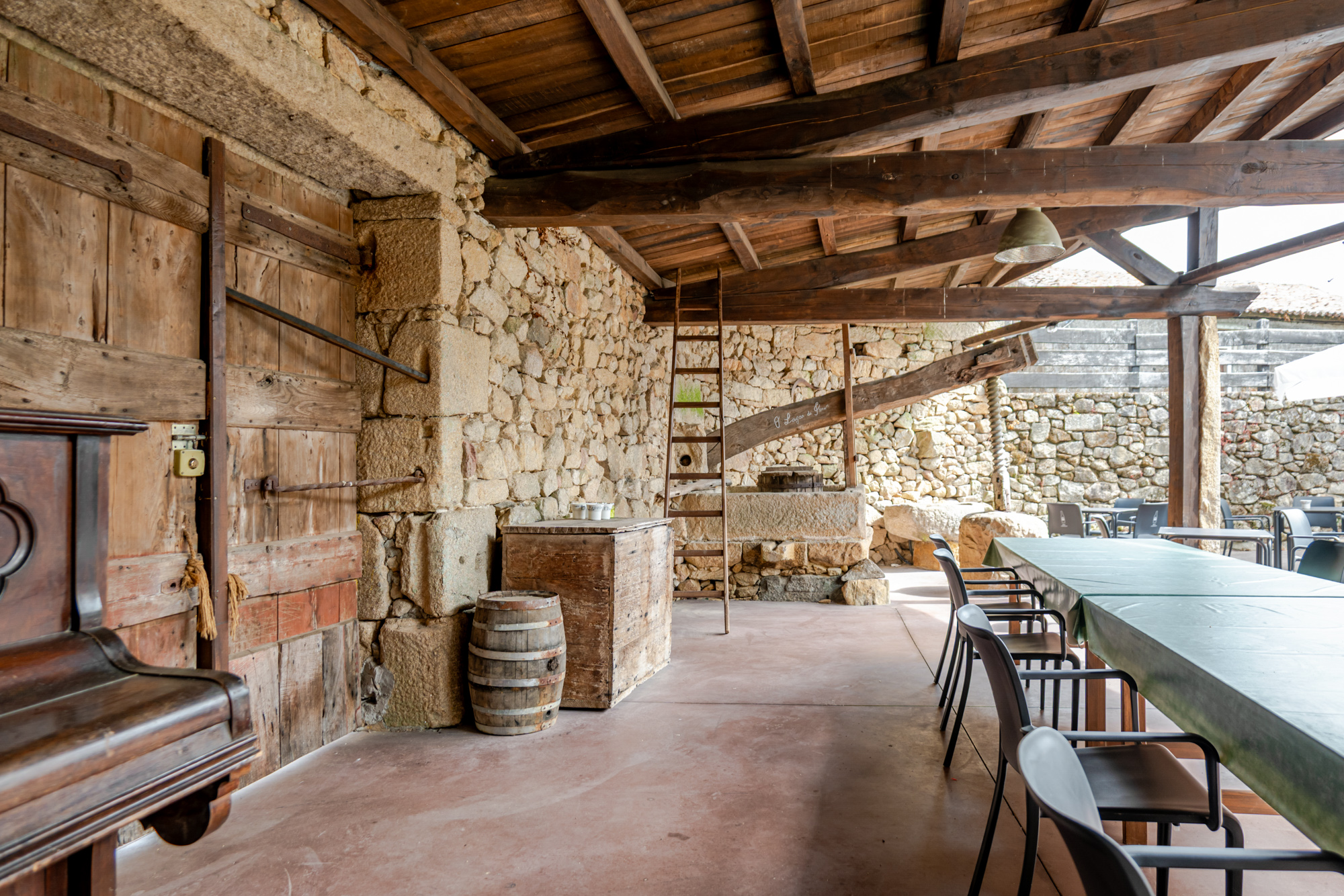
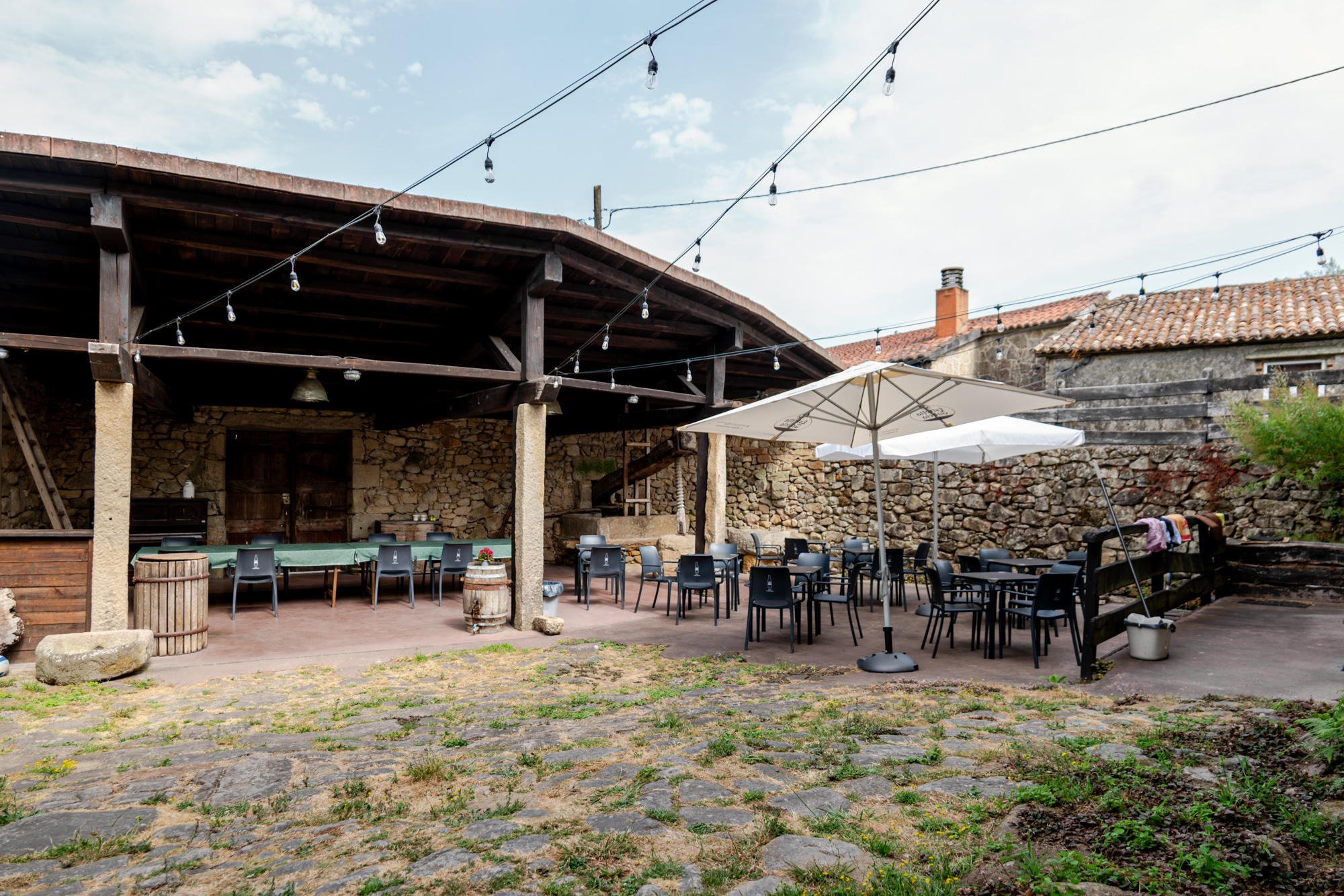
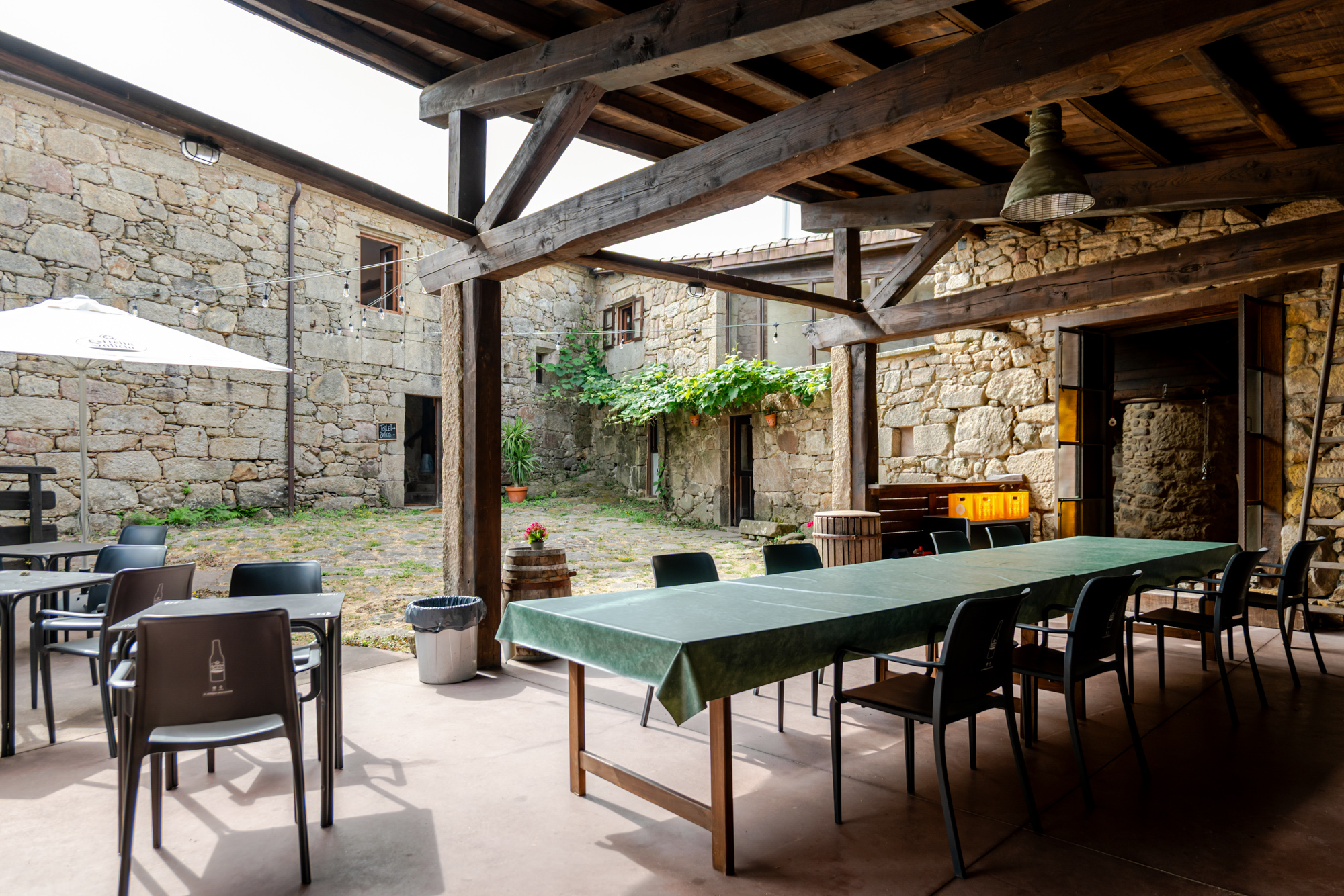
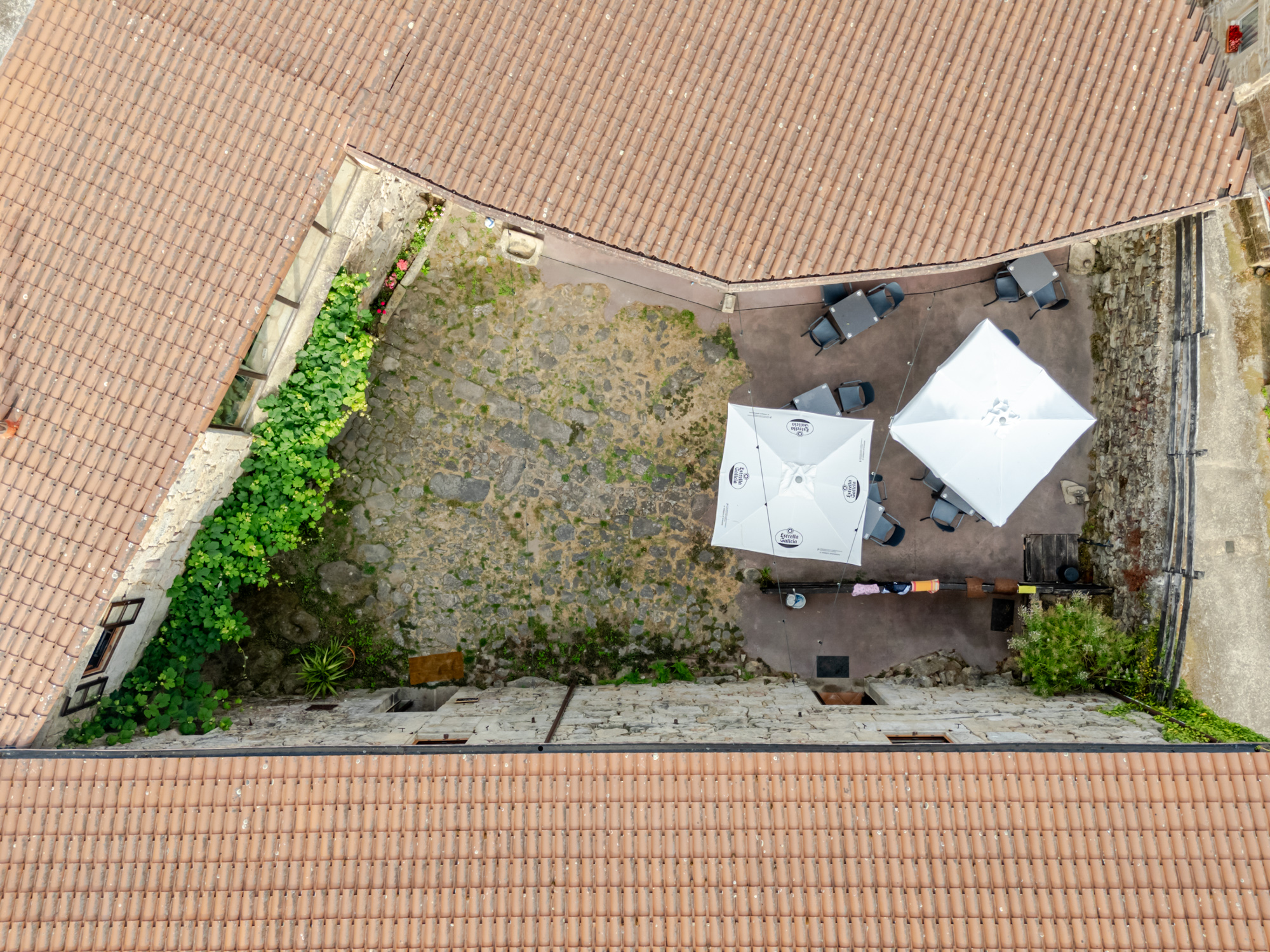
Much of the hostel's daily life takes place in its stone courtyard, enclosed by the building's own walls and partly covered by a wooden roof supported on columns, which serves as an outdoor dining area. As a distinctive feature, it retains an old stone wine press, a reminder of the property's former agricultural use.
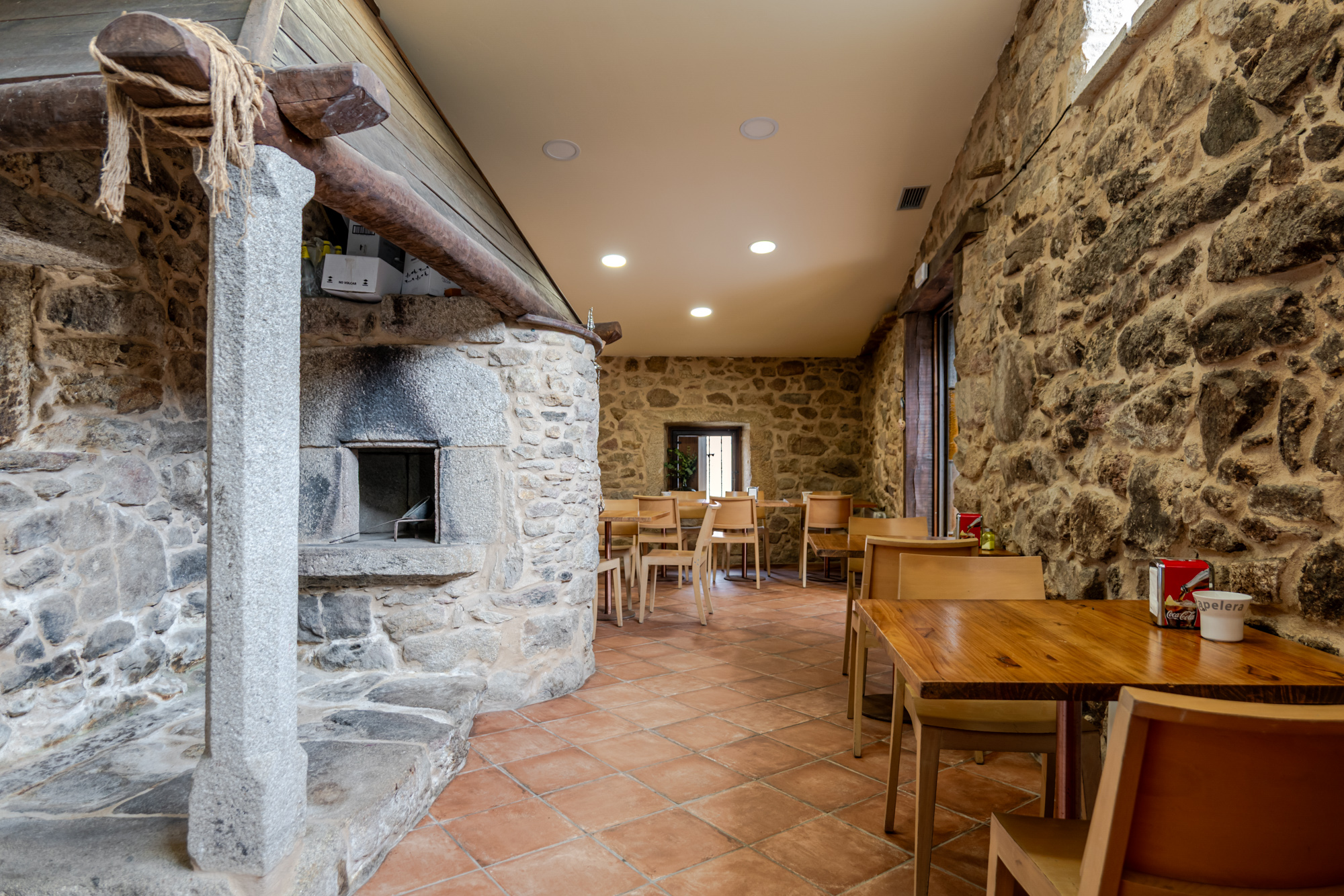
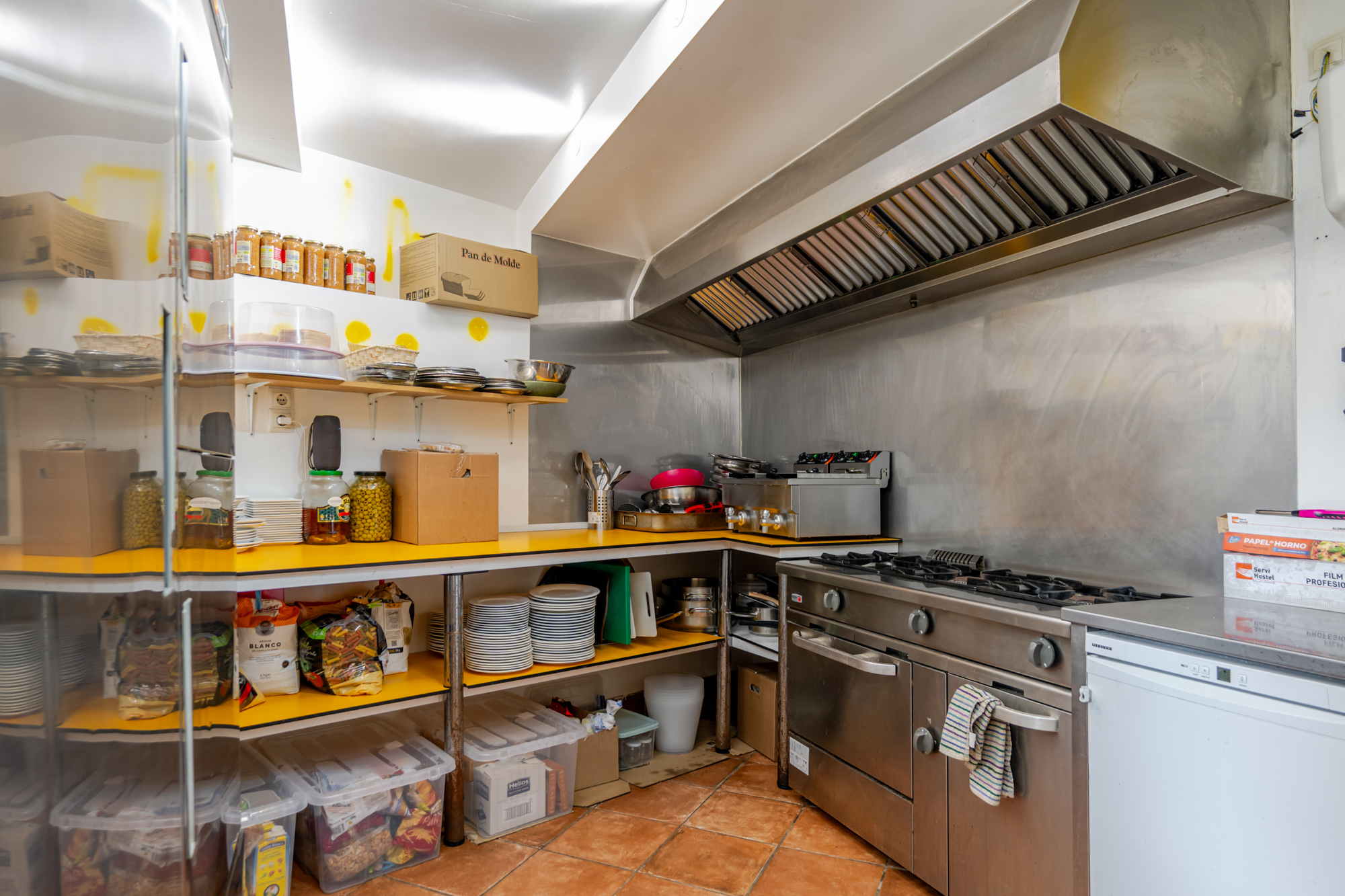
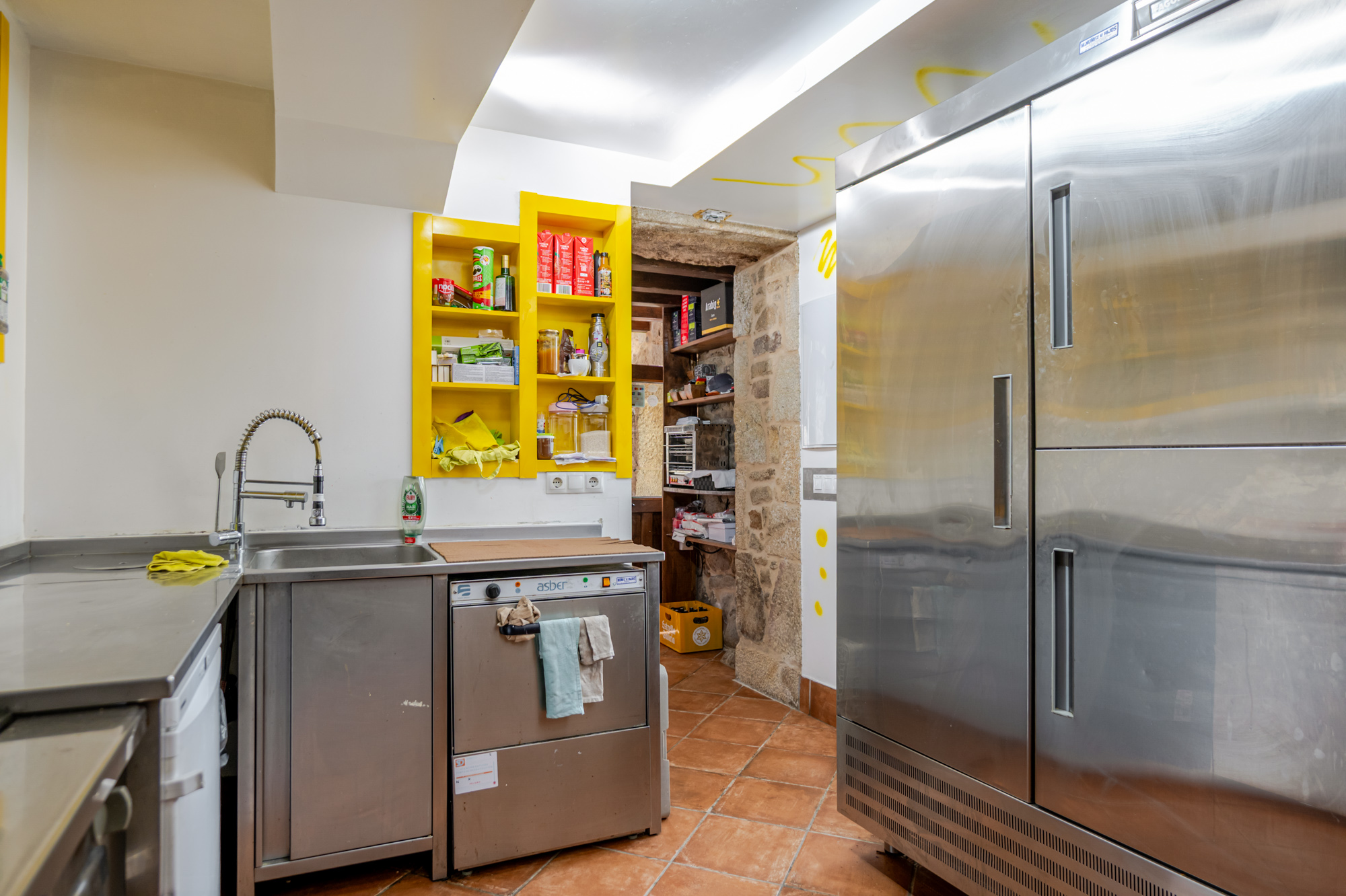
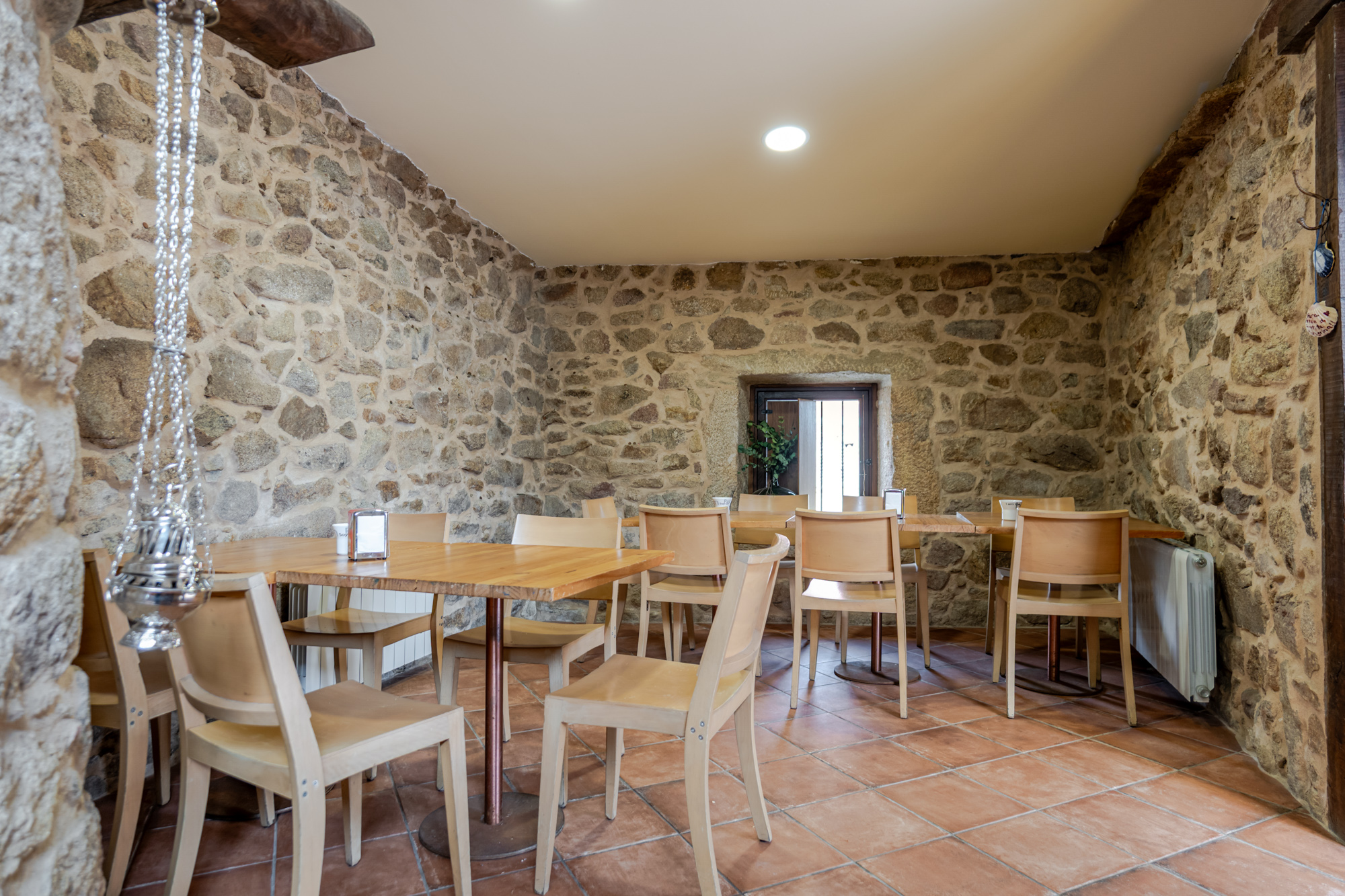
The courtyard in turn leads to the bar area, decorated in the same traditional spirit: a hearth and a stone oven remain in place, built into the original wall, next to a service bar. The adjoining kitchen has full professional equipment — an industrial gas cooker, a stainless steel extractor hood, a coffee machine, an industrial dishwasher and ample refrigeration units — more than sufficient to run the hostel's catering service.
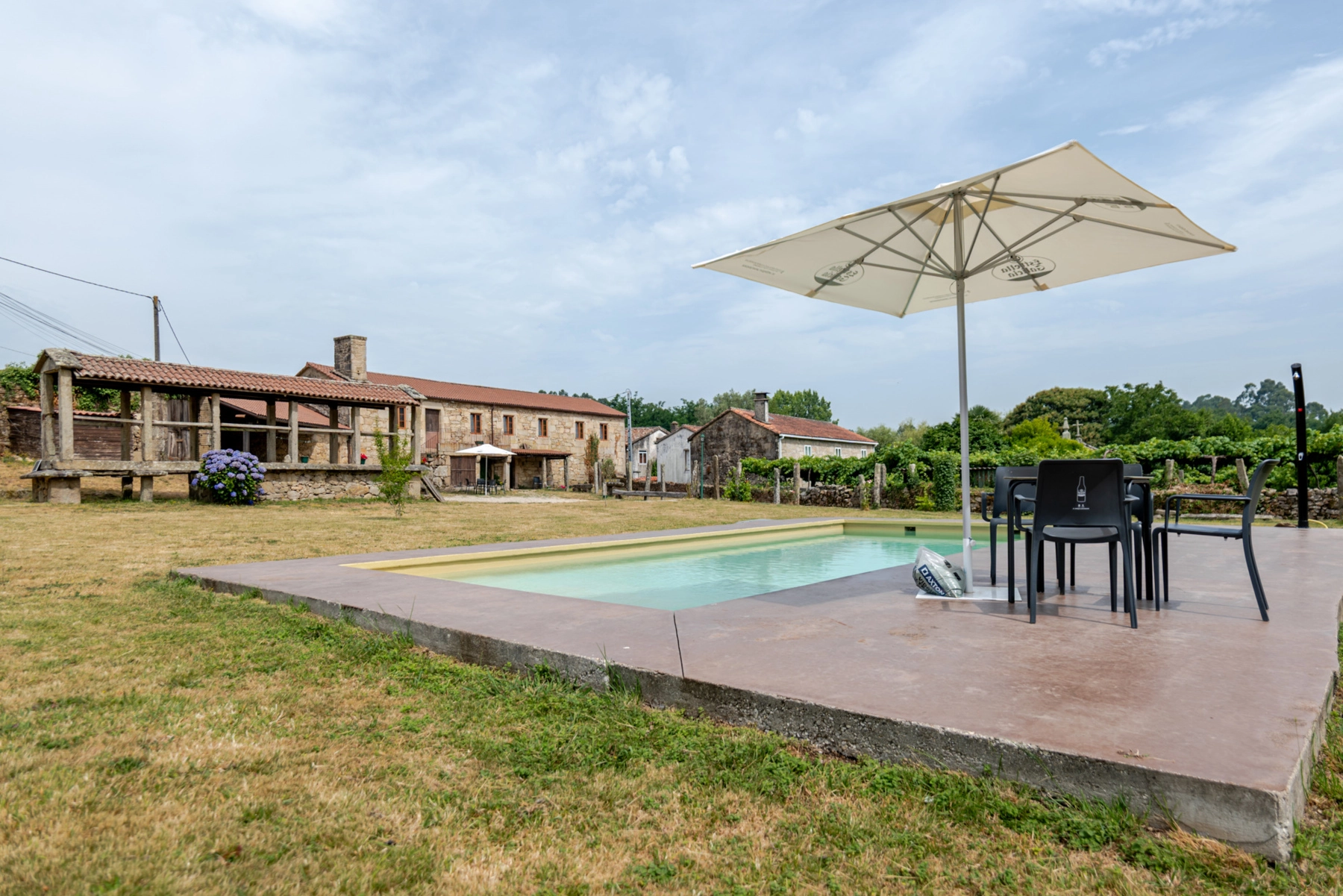
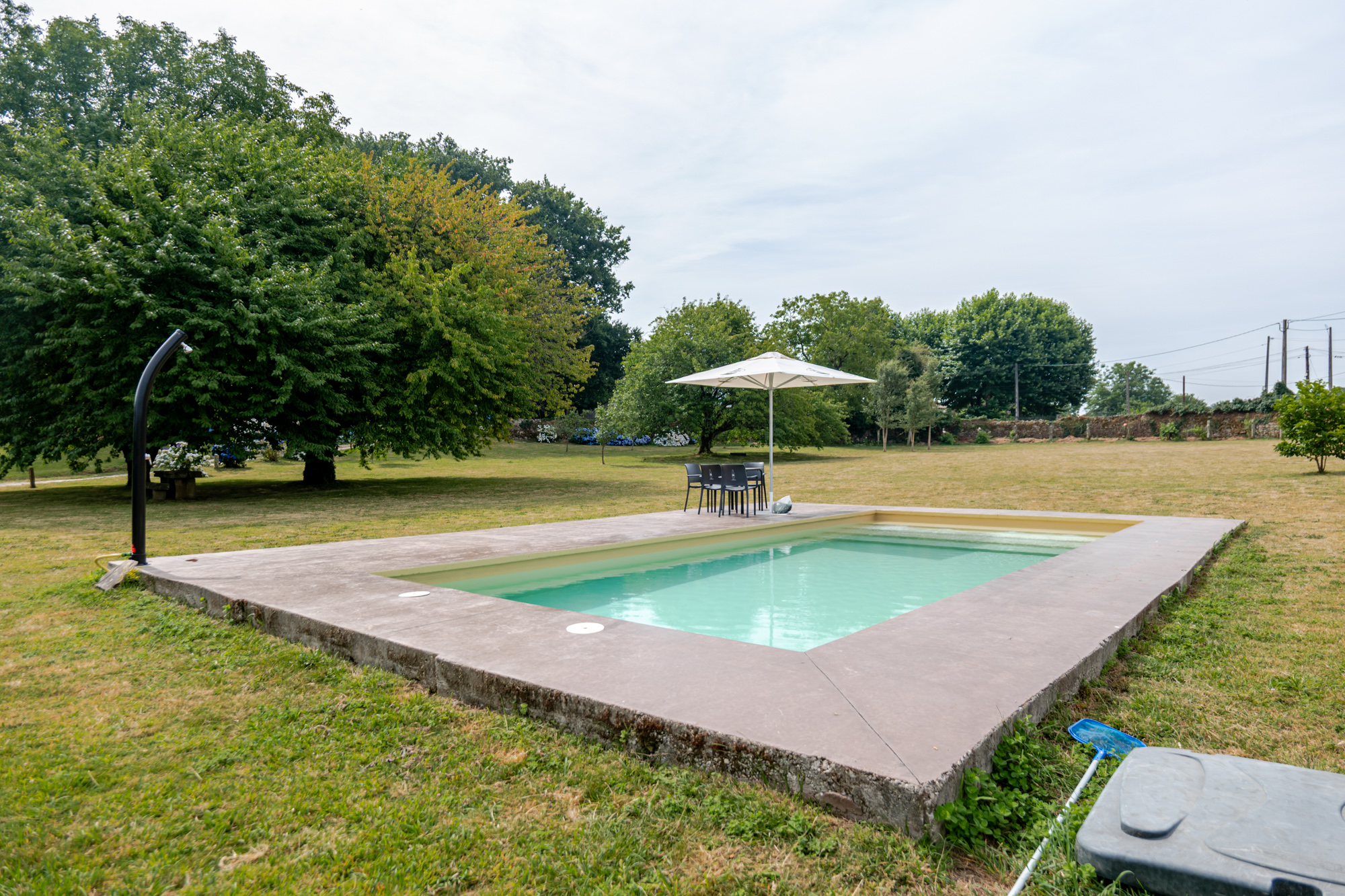
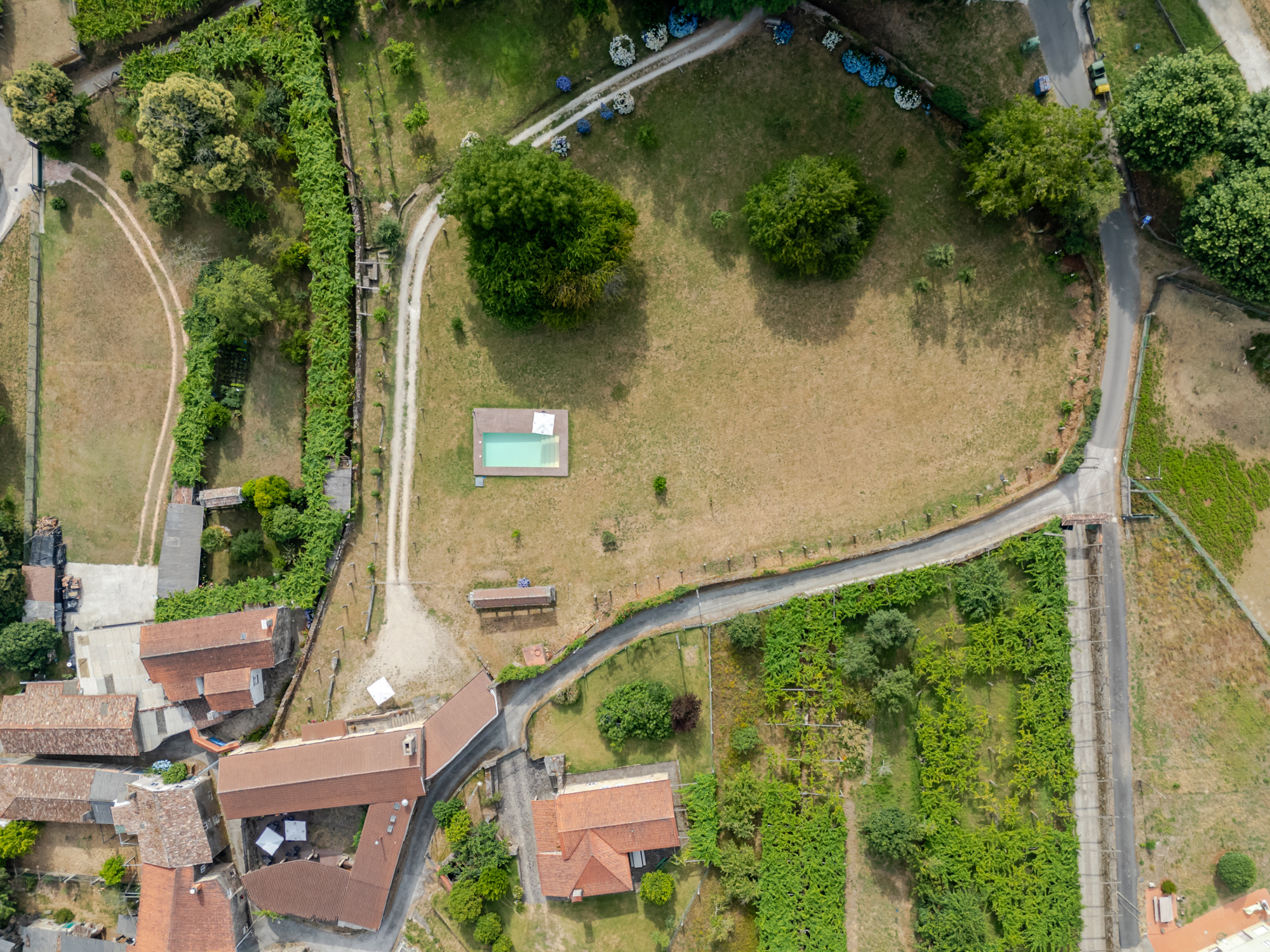
Around the buildings lies an extensive meadow, dotted with mature trees. Here you'll find the outdoor pool, with its terrace, shower and furniture, and the traditional hórreo, notably long and in good condition, visible from the main entrance to the property. An additional open-sided barn and several lawned areas complete the outdoor spaces.
Few Galician municipalities carry as much symbolic weight within the Way of St. James as Padrón. Its origins trace back to the ancient Iria Flavia, a Roman-founded city that became an episcopal seat, and which tradition links to the arrival of the remains of the Apostle Saint James from Jerusalem. In the heart of the town, the Church of Santiago still holds 'O Pedrón', the stone to which, according to legend, the boat carrying his body was moored.
The municipality also has other attractions: the Jardín Botánico-Artístico (Botanical and Artistic Garden), listed as a National Artistic Monument in 1946 and one of the oldest of its kind in the country, the house where Rosalía de Castro lived, now a museum, and the fact that it was the birthplace of Camilo José Cela, winner of the Nobel Prize in Literature. Gastronomically, the famous Padrón peppers, protected by their own designation of origin, are another hallmark of the area.
As one of the last stages before Santiago, Padrón sees a considerable flow of pilgrims through its streets every year. This flow tends to increase in Holy Years, known as Xacobeo Years, and 2027 will be one of them — a fact worth bearing in mind for anyone considering continuing the activity already carried out on this property.
Its proximity to Santiago de Compostela, just over 22 km away, also provides easy access to both the services of the Galician capital and its international airport. History, Jacobean heritage and good connectivity all come together at this point on the Camino Portugués, one of the busiest pilgrimage routes in Europe.
Overall, this property in Padrón offers a way into an already operating rural tourism business, located on a stretch of the Camino Portugués with a guaranteed flow of pilgrims on their way to Santiago de Compostela.
The Camino de Santiago is preparing for the Xacobeo Holy Year 2027, an exceptional event that has historically brought a significant increase in pilgrims and visitors along the entire Camino route. Investing in this property now offers a unique opportunity to maximise the return on investment from the very first moment.
* Publication for information purposes only, not binding or contractual. May contain errors or be subject to change.

6.711 m²

622 m²

6

3

All orientations

Yes

A 110 kWh m² / Year

A 19 kg CO₂ m² / Year
Are you interested in this property? Ask us your questions and we will contact you as soon as possible.