Your first Christmas in Galicia: a guide for newcomers
Are you going to spend your first Christmas in Galicia? Perhaps you've moved here from abroad, you're coming to spend the holidays with family or friends who live in the region, or you've simply chosen Galicia as your destination for these dates. Whatever your reason, this practical guide will reveal the keys to understanding and enjoying a Galician Christmas: you'll discover magical characters that only exist here, the dishes that cannot be missing from the table, the most important dates and how they are celebrated, the best markets and nativity scenes, and all the customs that make Galicia a unique destination to spend Christmas.
Pagan roots: the ancestral origin of Christmas celebrations
Before Christianity arrived in Galicia, the ancient Celtic communities already celebrated the winter solstice, marking the moment when the days began to lengthen again. These pagan festivities, linked to nature and agricultural cycles, worshipped the rebirth of light at the darkest time of the year.
The Christianization of Galicia did not erase these traditions, but transformed them. Many of the customs we associate with Galician Christmas today have echoes of those ancestral rituals: the bonfires, the family gatherings around the "lareira" (traditional fireplace in Galician homes), and the importance of food as a symbol of abundance and prosperity for the coming year.
This fusion of pagan and Christian has created a particular Christmas identity in Galicia, where there is a deep respect for tradition. Of course, globalization and contemporary influences have also left their mark: today, traditional Galician characters coexist with Santa Claus, LED lights adorn centuries-old streets, and Christmas tables mix traditional recipes with modern dishes and products.
O Apalpador: the exclusively Galician Christmas character
Among all the Christmas figures, there is one that is an exclusive treasure of Galicia: O Apalpador. This character, originally from the mountains of inland Galicia (especially from the regions of O Courel, Os Ancares, Sarria, Quiroga and Terra de Trives), represents a unique tradition that has survived the passage of time.
O Apalpador is a giant, kind-hearted charcoal burner with red hair and beard, who wears a black beret and patched clothes. He lives deep in the forests and feeds on wild berries, honey and wild boar. On the nights of December 24th or 31st, he descends from the mountains to visit children while they sleep. His mission is to feel their bellies (hence his name) to check if they have eaten well during the year, and he leaves them a handful of chestnuts by the bed, wishing them prosperity for the coming year.
Unlike today's Santa Claus, O Apalpador does not have a commercial purpose, it is a rural legend that reflects the concerns of an agricultural society where food was not always guaranteed. Its recovery in recent years has been a conscious effort to preserve Galician cultural identity against the globalization of Christmas traditions.
Christmas dates in Galicia: when and how it is celebrated
The Christmas calendar in Galicia is marked by Christian traditions. The key dates and their forms of celebration are similar throughout Spain, although in Galicia we incorporate our own customs.
Christmas Eve dinner
On December 24th, families gather around generous tables full of seafood, meats and traditional sweets to celebrate a dinner that marks the beginning of the festivities. After dinner, everyone chooses how to continue the night: going out to enjoy the festive atmosphere in bars and clubs has become an increasingly popular option, although many prefer to stay at home sharing more family time. For those who maintain the religious tradition, Midnight Mass at midnight is an important appointment. If you are in Santiago de Compostela, attending this celebration in the imposing Cathedral is a unique opportunity.
Christmas Day
December 25th, Christmas Day, is lived with more tranquility. Many families take the opportunity to gather again and share a meal, although with a more relaxed atmosphere than Christmas Eve. It is a day to rest, walk and enjoy the company of loved ones.
New Year's Eve and the twelve grapes
The night of December 31st is known as New Year's Eve, or simply, the end-of-year night. As in the rest of Spain, it is celebrated with a copious dinner that culminates in eating twelve grapes to the rhythm of the twelve chimes that mark the arrival of the new year. Squares and homes are filled with toasts and good wishes for the coming year. The celebration extends until dawn, either in the intimacy of home or in the festive atmosphere of bars and nightclubs. In Galicia, it is customary to end the celebration with breakfast of hot chocolate with churros.
The Three Wise Men
The tradition of the Three Wise Men has its origin in the biblical story of the three wise men who traveled from the East guided by a star to visit the newborn Jesus, offering him gold, frankincense and myrrh. In Galicia, as in the rest of Spain, on the afternoon of January 5th, the Three Kings Parades are celebrated in cities and towns, parades full of music, illuminated floats and candies that the Kings throw to the children. The morning of January 6th is the magical moment when the little ones —and not so little ones— open the gifts that Melchior, Gaspar and Balthazar left during the night.
Decorating Christmas Galician style: from holly to nativity scenes
Christmas decoration in Galicia does not differ much from what you will find in other parts of the world: streets and squares illuminated with thousands of lights, decorated Christmas trees in homes and public spaces, and all kinds of decorative elements that fill these dates with color and warmth.
Holly, a native touch in Christmas decoration
Among natural decorations, plant elements such as pine branches, pine cones and poinsettias stand out, but there is one especially rooted in Galician tradition: holly. This plant with bright green leaves and red berries, which grows abundantly in Galician forests, has been used since ancestral times as a symbol of protection and good luck, and remains an essential decorative element in many homes during Christmas.
The nativity scene, tradition inside and outside the home
Nativity scenes or cribs are an essential part of Galician Christmas decoration. Many families create elaborate representations of the birth of Jesus in their homes, sometimes incorporating typical Galician elements such as hórreos (granaries) or mills.
In addition, Galicia has some of the most spectacular nativity scenes in Spain, both traditional and living, which deserve a special visit.
- Electronic nativity scene of Begonte (Lugo): Declared of Tourist Interest of Galicia, this nativity scene with more than 50 years of history combines handcrafted figures with electronic mechanisms that bring to life scenes of Galician rural life. With more than 150 moving figures distributed over 150 m², it includes water mills, blacksmiths, farmers and peasants, in addition to traditional biblical scenes. It can be visited from early December to late January.
- Handcrafted nativity scene of Valga (Pontevedra): Considered the largest moving handcrafted nativity scene in Galicia, it has approximately 4,500 figures (300 of them mobile) spread over 400 m². Its originality lies in placing the nativity in a Galician village, incorporating scenes such as pig slaughtering, wine making or the Santa Compaña (Holy Company). Also declared of Tourist Interest of Galicia, each year it incorporates references to current social and political events.
- Giant nativity scene of Viveiro (Lugo): Known as "Viveiro ante o berce", this monumental nativity scene is installed in the historic center with life-size figures that recreate a period market. Blacksmiths, stonemasons, shepherds, winemakers and fishermen come to life in the streets of the historic center, creating a unique immersive experience.
- Living nativity scene of Bribes (Cambre, A Coruña): This small town transforms each December into a living nativity scene where neighbors and volunteers recreate scenes of the nativity with great detail and authenticity.
- Living nativity scene of Dacón (Maside, Ourense): Celebrated on December 25th, it is one of the most popular Christmas plans in inland Galicia, where the entire town participates in the representation.
Gastronomy: Galician flavors to celebrate the holidays
Galician Christmas is intensely lived around the table. Celebrations revolve around generous menus where Galician products are the protagonists. From sea to mountain, these are the foods and dishes that cannot be missing during these dates.
Products from the sea
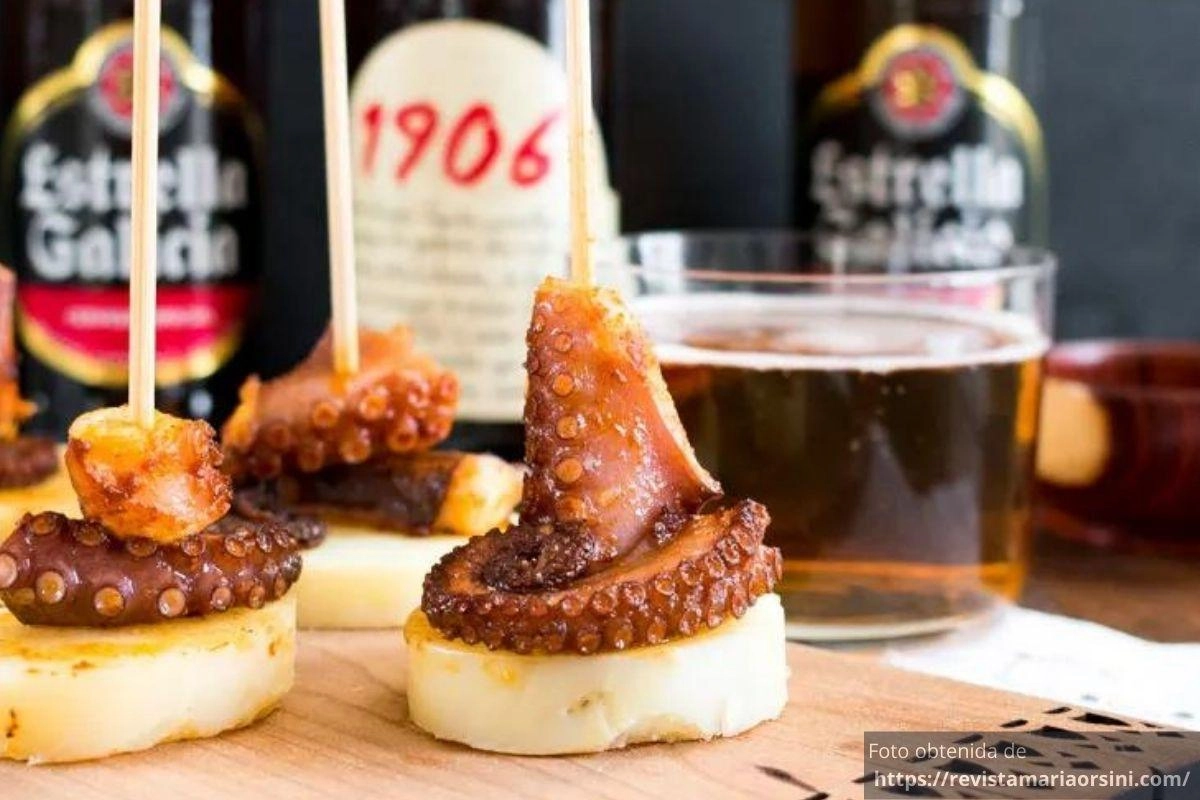
Seafood is the absolute king of Galician Christmas tables. Percebes (goose barnacles), nécoras (velvet crabs), spider crabs, lobsters, clams, zamburiñas (queen scallops), scallops and mussels from the Galician rías are at their best.
Meats and traditional dishes
Meat occupies a central place in almost all menus. The Vilalba capon, a bird raised artisanally in Lugo, is the protagonist of many of them. Roasted beef, rabbit or lamb dishes are usually present on the traditional menu, as well as Galician empanada filled with meat, fish or seafood.
Sweets and desserts
Turrón and polvorones (traditional Christmas sweets) are always present, and there may be filloas (a kind of Galician crepes), rosquillas (ring-shaped pastries) and the Roscón de Reyes (Kings' cake) on January 6th. Roasted chestnuts, linked to O Apalpador and consumed at the end of the year during the magosto, are a living vestige of our ancestral traditions.
Wines and liquors
Wines from Galician denominations of origin (Rías Baixas, Ribeiro, Ribeira Sacra, Valdeorras) are the perfect accompaniment for any Christmas dish. Galician orujo (pomace brandy), herbal liqueurs and coffee liqueur (made with brandy, coffee, sugar and lemon peel) are served as a digestif after dessert.
Cultural offerings and festive atmosphere
Galicia offers a wide cultural and leisure program to enjoy Christmas outside the home as well. Cities and towns are transformed with markets, spectacular illuminations and events that fill the streets with festive atmosphere throughout December and early January.
Christmas markets: crafts and local products
Christmas markets have become an essential appointment in Galician cities, offering artisan products, local gastronomy and a cozy festive atmosphere.
- Vigo: The Cíes Market (Praza de Compostela) combines crafts, gastronomy and attractions such as a giant Ferris wheel and carousels.
- Santiago de Compostela: The Mercado de Nadal (Carreira do Conde and Central Area, from November 28th to January 5th) offers about 70 stalls with Christmas decorations, gourmet products and crafts. Meanwhile, the Mercado da Estrela is an urban festival held one weekend in mid-December in several emblematic spaces, bringing together almost a hundred Galician artists and creators with craft, fashion, illustration and design stalls, as well as food trucks, concerts and workshops.
- A Coruña: The Feira Artesá do Nadal in the Xardíns de Méndez Núñez (December 20th to January 5th) features pottery, jewelry and handcrafted musical instruments.
- Lugo: The Nadalmente Lucense in Praza Maior (December 5th to January 5th) combines Christmas products with children's activities and shows.
- Ourense, Ferrol and Pontevedra: Each city offers its own markets with local crafts, family activities and festive atmosphere that extends until January 6th or 7th.
Illuminations that transform the streets
Vigo has become a true international Christmas reference for its spectacular Christmas illumination. The city invests each year in creating one of the most impressive light displays in the world, with more than 11.5 million LED points distributed throughout 420 streets and squares. The star element is the Porta do Sol tree, which with its more than 40 meters in height has become an icon that attracts visitors from all over Spain and beyond.
Santiago de Compostela, A Coruña, Lugo and Ourense, and practically any town or village in Galicia, also display their best with illuminations that transform every corner.
Concert and show schedules
City councils, auditoriums and theaters program classical music concerts, carols and performances by local groups. There are also children's theater plays, ballets and Christmas shows for all audiences. Check the schedule of the place you are going to visit and reserve a day to enjoy one of these events.
Practical tips for your first Galician Christmas
- Climate: December and January are cold and humid. Bring warm clothes, rainwear and comfortable footwear.
- Reservations: Restaurants and accommodations fill up quickly during the holidays. Book in advance.
- Transportation: Many markets and nativity scenes are in historic centers. Use public transport or walk, as parking can be complicated.
- Schedules: Markets usually open in the afternoons on weekdays and all day on weekends. Check specific nativity scene schedules before visiting them.
- Language: Although Spanish is spoken and many people speak English, learning some words in Galician ("Bo Nadal", "graciñas", "bo día"...) will be very appreciated.
Christmas in Galicia, an experience that invites you to stay
Coming to Galicia at Christmas is a perfect opportunity to discover the territory in a different way, connect with its traditions and its people, taste authentic flavors and feel the warmth of its homes.
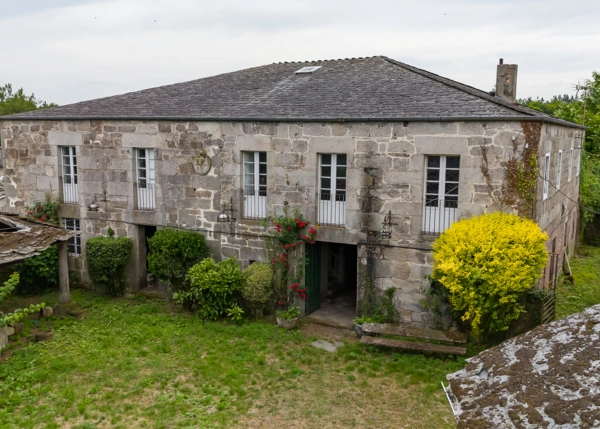
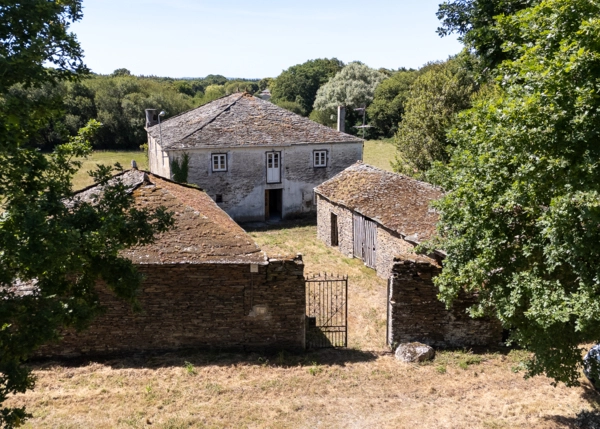
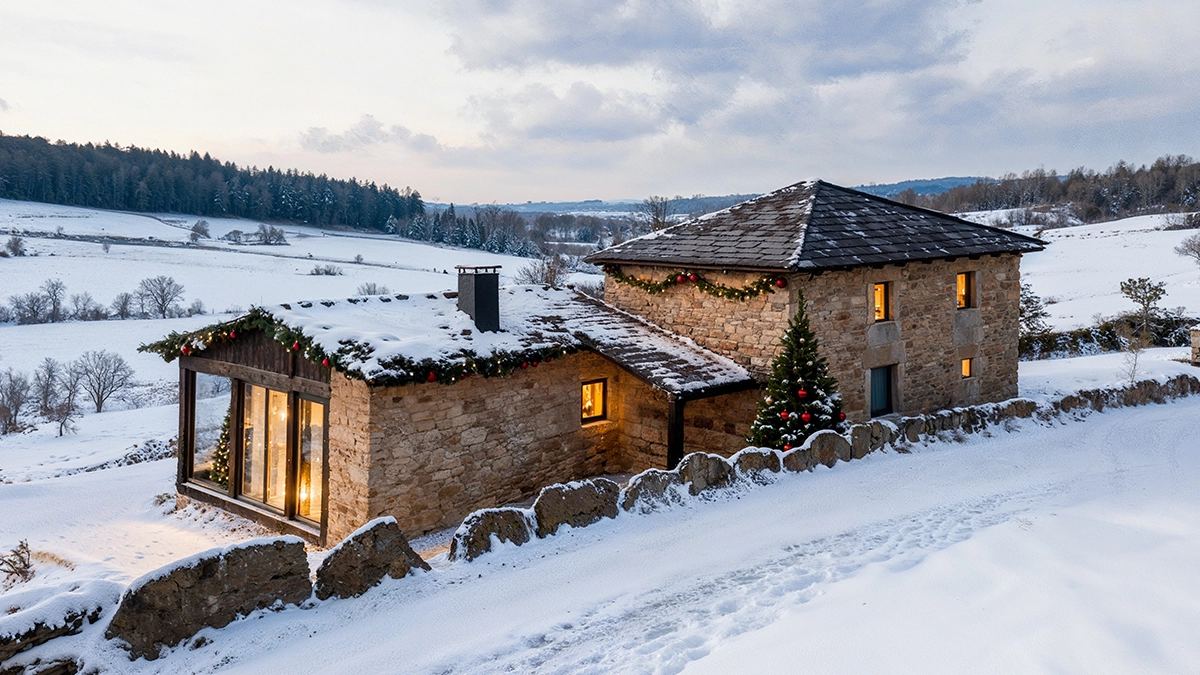
Many visitors who experience their first Galician Christmas feel the desire to return. Some even dream of having their own corner in these green lands, a refuge where Christmas is lived with the authenticity of the countryside, surrounded by forests, with the crackling of wood in the fireplace and the necessary time to enjoy what really matters.
From Grupo Country Homes, specialists in rural properties in Galicia, we want to be your bridge to that dream. We invite you to discover our wide catalog of houses, manor houses and estates, and to learn about all the services we offer to make your rural life project a reality.